Pneumococcal vaccine paths for immunocompromised kids
The routine pneumococcal conjugate vaccine pathway is a four-dose series at 2, 4, 6, and 12–15 months.
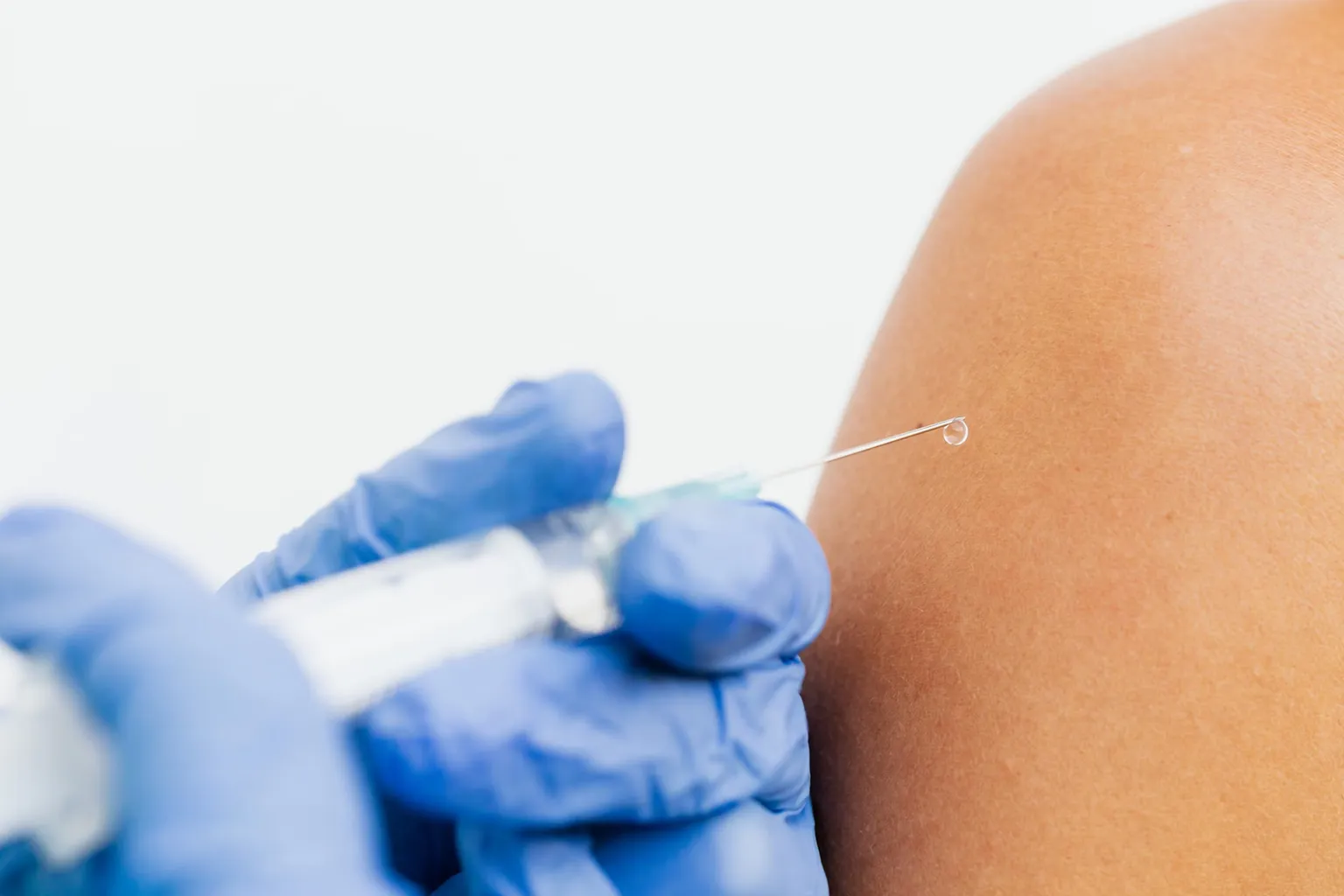
Immunocompromised children may require an additional decision point: whether the series includes PCV20, whether the child is at least 2 years old, and whether the underlying condition qualifies for a high-risk schedule.
The operational difference between PCV20, PCV15, and PPSV23 is not cosmetic. It changes the number of required doses, the minimum interval between products, and whether additional pneumococcal vaccination is needed. The correct pathway depends on age, immune status, and documented prior vaccination. A single generic schedule is not clinically valid for every child with immunodeficiency.
The shift to PCV20: fewer decision points in high-risk schedules
Pneumococcal conjugate vaccines generate the core pediatric immunization response. Current CDC guidance uses either PCV15 or PCV20 in the routine infant series. For infants, the standard schedule remains:
- Dose 1 at 2 months.
- Dose 2 at 4 months.
- Dose 3 at 6 months.
- Dose 4 at 12–15 months.
The distinction becomes more consequential when the child has an immunocompromising condition and is between 2 and 18 years of age.
For high-risk children who receive PCV20, the pneumococcal series is considered complete. No additional pneumococcal dose is required under the stated pathway. This is the main scheduling advantage of PCV20. It removes the subsequent PPSV23 decision that may follow a PCV series without PCV20.
PCV15 is different. A child who completes a high-risk PCV series without PCV20 may require either PCV20 or PPSV23 at least 8 weeks after the last PCV dose. The choice is therefore not simply between two interchangeable products. PCV15 can be part of a valid series, but it may leave a later dose decision unresolved.
| Parameter | PCV20 pathway | PCV15 pathway followed by PPSV23 |
|---|---|---|
| Vaccine class | Pneumococcal conjugate vaccine | Conjugate vaccine followed by polysaccharide vaccine |
| Role in high-risk children aged 2–18 years | Can complete the pneumococcal series | May require an additional PCV20 or PPSV23 dose |
| Minimum interval after prior PCV series | Depends on the child’s documented history and schedule | At least 8 weeks before PPSV23 or PCV20 when indicated |
| Additional long-term decision | No additional pneumococcal dose required after qualifying PCV20 pathway | If PPSV23 is used, another PPSV23 or PCV20 may be indicated at least 5 years later |
| Use in children under 2 years | PCV20 is used within the conjugate vaccine schedule | PPSV23 is not recommended under 2 years of age |
| Scheduling complexity | Lower after completion | Higher because product sequence and revaccination interval matter |
The table does not replace the immunization record. The same product can have different implications depending on whether it was administered as part of the routine infant series, as catch-up vaccination, or after the diagnosis of an immunocompromising condition.
PCV20 reduces schedule complexity because it can close the high-risk pneumococcal pathway. PCV15 may require a second-stage decision.
PCV20 vs. PCV15 in pediatric immunodeficiency
The relevant comparison is not a simplistic efficacy ranking. It is a comparison of pathway architecture.
PCV20 and PCV15 are conjugate vaccines. In clinical scheduling, the decisive variable is whether PCV20 is present in the completed pathway. For an immunocompromised child aged 2–18 years, PCV20 can complete the pneumococcal series. A prior series using PCV13 or PCV15 does not produce the same endpoint automatically.
This distinction matters in three common record configurations.
A completed routine series that includes PCV20
If the child has received the required PCV doses and the pathway includes PCV20, no additional pneumococcal dose is required under the cited high-risk guidance for children aged 2–18 years.
The record must still be interpreted by age and dose history. A vaccine label alone is insufficient. The assessment requires:
- The child’s current age.
- The number of prior PCV doses.
- The product used for each dose.
- The interval between doses.
- The date on which the immunocompromising condition became clinically relevant.
- Whether the child is in the 2–18-year high-risk group.
This is an immunization-record problem with the same basic requirement as a diagnostic assay: input quality controls the output. An incomplete record creates uncertainty in the schedule, regardless of how precise the guideline appears.
A completed series using PCV13 or PCV15 without PCV20
A high-risk child who completed a PCV series without PCV20 may require PCV20 or PPSV23 at least 8 weeks after the last PCV dose.
The 8-week interval is a minimum scheduling constraint. It is not a suggestion to compress the pathway. It also does not mean that PCV20 and PPSV23 should be administered together. The products occupy different positions in the sequence.
If the clinical team selects PCV20, the pneumococcal series is considered complete for children aged 2–18 years in the specified high-risk group. If PPSV23 is selected instead, the record remains open for a later revaccination decision.
An incomplete or uncertain PCV history
An uncertain history requires reconstruction before product selection. The missing variables are not administrative details. They directly affect dose count and interval interpretation.
The highest-value data elements are:
1. The exact product name, not only the generic term pneumococcal vaccine.
2. Administration dates.
3. The child’s age at each dose.
4. Evidence of PCV20, PCV15, or an earlier PCV product.
5. Documentation of the immunocompromising diagnosis.
6. Any previous PPSV23 dose and its date.
Without these data, the clinician cannot reliably distinguish a completed PCV20 pathway from a PCV15 pathway requiring an additional pneumococcal product.
Navigating pneumococcal immunization paths for high-risk kids
The high-risk schedule applies to defined clinical categories. The cited conditions include:
- Functional or anatomic asplenia.
- HIV infection.
- Primary immunodeficiencies, excluding chronic granulomatous disease.
- Leukemia.
- Lymphoma.
- Chronic renal failure.
- Nephrotic syndrome.
- Solid organ transplantation.
The classification is diagnosis-specific. A child described generally as having a weak immune system does not provide enough information to select the correct schedule. The clinical record must identify the condition and its relevance to pneumococcal risk.
This is particularly important in primary immunodeficiency. The category is broad, but the guidance explicitly excludes chronic granulomatous disease from the listed immunocompromising conditions requiring these high-risk pneumococcal booster schedules. That exclusion should not be erased by using the broader label of primary immunodeficiency.
The same principle applies to children with malignancy, renal disease, or transplant history. The vaccine pathway should be mapped to the documented condition, age, and prior doses. It should not be inferred from a single laboratory biomarker or from a general history of recurrent infection.
Why age changes the pathway
PPSV23 is not recommended for children younger than 2 years. This is a hard boundary in the pathway.
A child under 2 years remains within the conjugate-vaccine framework. PCV15 or PCV20 may be used according to the applicable infant or catch-up schedule, but PPSV23 is not the substitute product for an incomplete infant series.
At age 2 years and older, PPSV23 may become an option for a high-risk child who completed a PCV series without PCV20. The transition is therefore age-dependent and record-dependent. It cannot be reduced to the diagnosis alone.
A practical age-based interpretation is:
- Under 2 years: use the appropriate PCV schedule; do not use PPSV23.
- Age 2–18 years with qualifying immunocompromise and PCV20 completed: no additional pneumococcal dose is required under the cited pathway.
- Age 2–18 years with qualifying immunocompromise and a PCV series without PCV20: administer PCV20 or PPSV23 at least 8 weeks after the last PCV dose, when indicated.
- Any child with a prior PPSV23 dose: calculate the interval to the next possible PPSV23 or PCV20 decision; the stated minimum interval is 5 years.
Strategic timing: the 8-week interval between PCV and PPSV23
The interval between conjugate and polysaccharide vaccines is a core technical constraint. For a high-risk child who completed a PCV series without PCV20, PPSV23 should be administered at least 8 weeks after the last PCV dose.
PCV15 and PPSV23 should not be administered during the same clinical visit. PPSV23 must follow PCV15 by at least 8 weeks. The interval is intended to preserve the expected immune response rather than simply separate two injections on the calendar.
This creates a sequence that must be read chronologically:
1. Establish the last qualifying PCV dose.
2. Identify whether that dose was PCV15, PCV13, or another relevant PCV product.
3. Confirm that PCV20 was not already used to complete the pathway.
4. Calculate an interval of at least 8 weeks.
5. Administer PPSV23 or use PCV20 if that is the selected pathway.
6. Record the product and date for future revaccination logic.
The eight-week interval is not interchangeable with a routine visit interval. A scheduled appointment at six weeks does not satisfy the minimum. Nor does administering both vaccines at the same visit simplify the schedule. It creates a sequencing error.
Why the product sequence matters
PCV and PPSV23 do not have identical immunologic roles. The schedule is constructed around the sequence, not only around antigen coverage. A child can therefore be inadequately managed even when both products appear somewhere in the record if they were administered at the wrong interval.
For clinical research and post-market surveillance, the relevant variables include:
- Vaccine product.
- Dose number.
- Age at administration.
- Interval from the preceding dose.
- Immunocompromising diagnosis.
- Subsequent invasive pneumococcal disease.
- Adverse events and tolerability.
A record that lists only pneumococcal vaccination without product-level resolution has low analytic value. It cannot reliably classify the child into a PCV20-complete, PCV15-plus-PPSV23, or incomplete pathway.
Long-term protection: PPSV23 sequencing and the five-year interval
If a high-risk child receives PPSV23, a second PPSV23 dose or a dose of PCV20 is recommended at least 5 years after the first PPSV23 dose.
The five-year interval applies to the next decision point. It is not a reason to administer an early booster. It also does not imply that every child requires repeated PPSV23 doses indefinitely. The available guidance establishes the second-dose interval but does not define the optimal timing for a third or later PPSV23 dose after the child transitions into adulthood.
This creates two distinct long-term pathways:
- PPSV23 followed by PCV20: the later PCV20 dose is administered at least 5 years after the first PPSV23 dose.
- PPSV23 followed by a second PPSV23: the second PPSV23 dose is also administered at least 5 years after the first.
The decision between these options depends on the applicable clinical guidance at the time, the child’s age, immune condition, prior PCV products, and the complete vaccine record. The pathway should not be extended beyond the available evidence by assuming that repeated PPSV23 doses have a standardized lifelong schedule.
A PPSV23 dose creates a timed follow-up obligation. The five-year interval is part of the protocol, not an optional calendar reminder.
For children approaching adulthood, documentation quality becomes especially important. Pediatric immunization records often cross health systems, specialty clinics, transplant programs, and primary care offices. A missing PPSV23 date can change the interpretation of whether the five-year minimum has elapsed.
Clinical boundaries and contraindications
The most consequential errors are usually boundary errors:
- Giving PPSV23 before 2 years of age.
- Administering PCV15 and PPSV23 at the same visit.
- Omitting the minimum 8-week interval between the last PCV dose and PPSV23.
- Adding PPSV23 after a completed PCV20 pathway when the guidance considers the series complete.
- Treating every primary immunodeficiency as equivalent to the listed high-risk conditions.
- Repeating PPSV23 before the five-year minimum interval.
- Assuming that the same schedule applies regardless of transplant, renal, hematologic, or HIV status.
The pathway should be reviewed against the actual clinical category. Listed high-risk conditions include asplenia, HIV infection, qualifying primary immunodeficiencies, leukemia, lymphoma, chronic renal failure, nephrotic syndrome, and solid organ transplantation. Chronic granulomatous disease is specifically excluded from the cited high-risk pneumococcal booster classification.
PCV20 pathway versus PCV15 followed by PPSV23
The simplest comparative assessment is operational:
- PCV20: fewer subsequent decisions after completion in a high-risk child aged 2–18 years.
- PCV15 followed by PPSV23: valid but dependent on an 8-week minimum interval.
- PPSV23 after PCV15: generates a later five-year revaccination decision.
- PPSV23 under age 2: not recommended.
- PCV15 and PPSV23 at one visit: not an acceptable sequence under the cited guidance.
This is why the answer to the question of PCV20 versus PCV15 cannot be reduced to a product preference. The relevant endpoint is clinical utility: completion status, interval integrity, record clarity, and avoidance of unnecessary doses.
A method-based assessment of the available paths
For pediatric immunization programs, the pathway with the highest practical specificity is the one that can be assigned from complete data and executed without ambiguous follow-up. PCV20 has a clear advantage in this respect for high-risk children aged 2–18 years because a qualifying PCV20 series completes the pneumococcal schedule.
PCV15 remains a valid conjugate-vaccine option, but its downstream requirements are more complex. If the child later receives PPSV23, the record must preserve the eight-week PCV-to-PPSV23 interval and the five-year interval before the next PPSV23 or PCV20 decision.
The evidence base also has limits. Long-term comparative clinical efficacy studies directly measuring invasive pneumococcal disease outcomes for PCV20 alone versus PCV15 followed by PPSV23 in pediatric solid organ transplant recipients remain limited in the supplied evidence. The exact optimal revaccination pattern beyond the five-year interval, particularly for children entering adulthood, is also not established here.
That uncertainty does not invalidate the current schedule. It defines the boundary of what can be concluded. Protocol compliance is supported. Claims of universal superiority for one pathway across every immunocompromised pediatric subgroup are not.
Clinical utility
The pneumococcal vaccine options for immunocompromised children are determined by four variables: age, qualifying condition, prior PCV product, and PPSV23 history.
The current pathway can be summarized with strict operational rules:
1. Use the routine four-dose PCV series at 2, 4, 6, and 12–15 months for infants.
2. For high-risk children aged 2–18 years, a qualifying PCV20 pathway completes pneumococcal vaccination.
3. After a PCV series without PCV20, use PCV20 or PPSV23 at least 8 weeks after the last PCV dose when indicated.
4. Do not administer PCV15 and PPSV23 at the same visit.
5. Do not use PPSV23 in children under 2 years.
6. After PPSV23, schedule the next PPSV23 or PCV20 decision no sooner than 5 years later.
7. Apply the high-risk pathway only to the clinical conditions included in the guidance.
The preferred schedule is therefore not the one with the most products. It is the one with the highest diagnostic specificity, the fewest unresolved branches, and a complete record of product, dose, age, and interval. For most qualifying children aged 2–18 years, PCV20 provides the cleaner endpoint. When PPSV23 is used, timing becomes the primary control variable.