Cocooning vs Delayed Vaccines: Two Immunoprotection Routes
A 76.9% reduction in severe acute respiratory infection (SARI) among infants was reported in one study when household contacts were vaccinated against influenza.
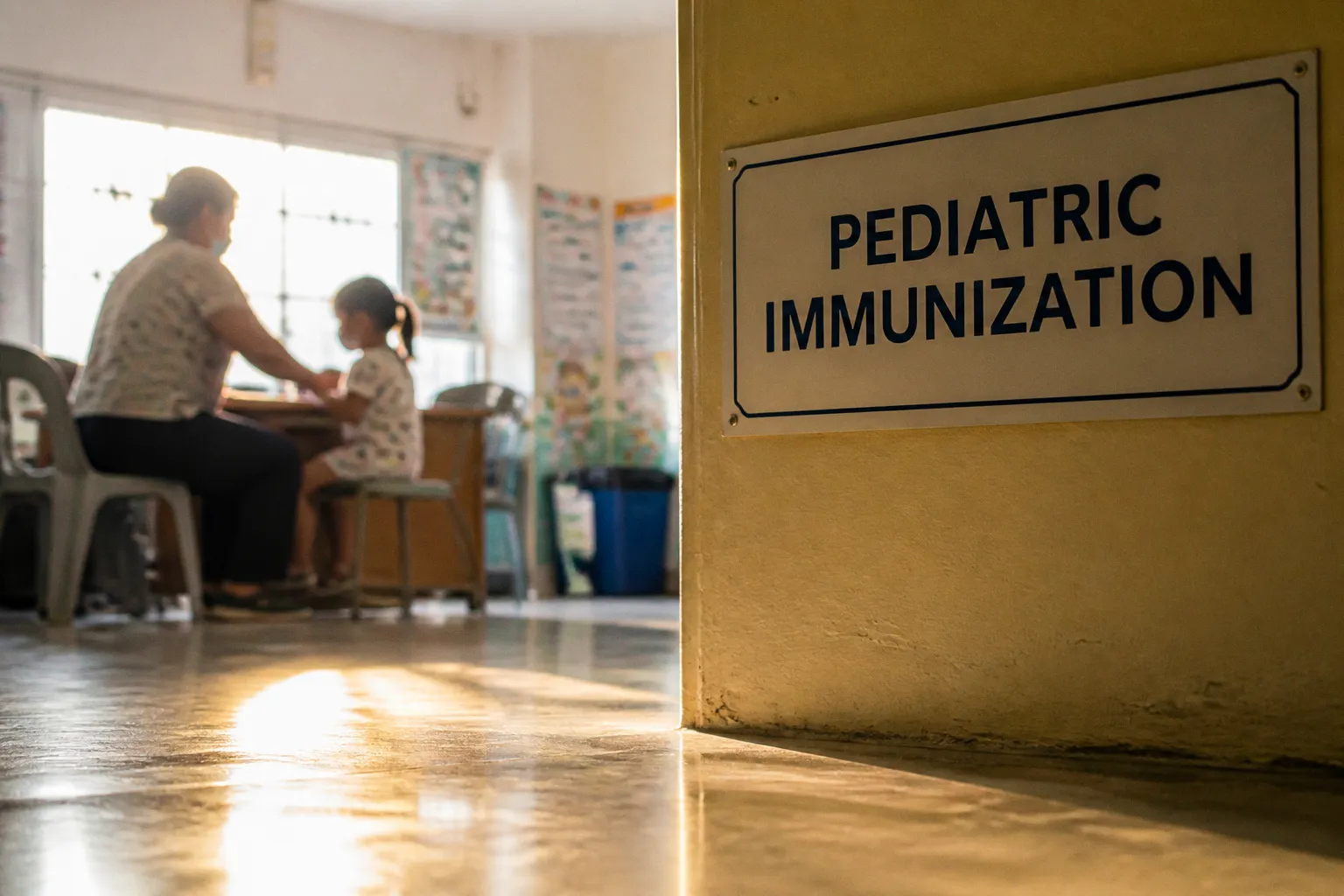
Cocooning vs Delayed Vaccines: Two Immunoprotection Routes
It is an important result, but it is not a universal ceiling for cocooning and should not be treated as a guaranteed outcome in every family or for every infection. The same body of evidence also found no statistically significant protective effect when vaccination was limited to the mother in the study setting. That finding is specific to maternal-only influenza vaccination; it does not prove that immunizing a single caregiver is always ineffective.
The practical problem remains the same: an immunocompromised child may not be able to generate a reliable response to every vaccine, while postponing the child’s own immunization can leave a protection gap. Household vaccination and carefully timed direct vaccination address different parts of that gap. For children with immune deficiencies, cancer therapy, transplant-related immunosuppression, or prolonged treatment with immune-modifying drugs, the most defensible approach is usually layered rather than ideological: protect the child directly whenever it is safe and useful, and reduce exposure risk through vaccinated contacts while direct protection is limited.
The Mechanics of Cocooning: Building a Protective Household Shield
Cocooning operates on a straightforward epidemiological premise: if the child cannot mount a dependable response to a given vaccine antigen, the protective perimeter shifts outward to the people most likely to bring an infection into the home. Parents, siblings, grandparents, regular babysitters, and, where relevant, healthcare workers receive age-appropriate vaccines so that common transmission routes are interrupted before they reach the patient.
This is not a substitute for the child’s routine immunization plan. It is an exposure-control strategy, and its strength depends on how many meaningful contacts are covered, how current their vaccinations are, and how closely the household can limit avoidable exposure during periods of profound immune suppression.
Three variables determine how much the strategy can realistically do.
- Antigen coverage breadth: The contact’s immunization status should match the child’s exposure profile. Influenza, pertussis, measles, mumps, rubella, varicella, and SARS-CoV-2 may all matter, but the relevant set depends on age, local recommendations, current circulation, household structure, and the child’s diagnosis. A family preparing for a transplant may need a different plan from a family managing a child receiving chemotherapy or B-cell-depleting treatment.
- Timing: A vaccine given to a household contact needs time to generate an immune response before a period of intensive contact or anticipated exposure. A lead time of roughly two to four weeks is often used operationally, depending on the vaccine and the clinical situation. This is a planning interval, not a guarantee that transmission cannot occur.
- Coverage completeness: Protection is more credible when all regularly exposed contacts are assessed rather than when one available adult is vaccinated and the rest of the household remains unprotected. The maternal-only influenza finding should be read in that narrow context: it showed no significant reduction in infant SARI in that study, while the estimate associated with vaccination of all household contacts was 76.9%. It does not establish a general rule that one vaccinated caregiver can never contribute useful protection.
Cocooning is a coverage-density problem, not a vaccine-efficacy problem. Its value grows when the people who actually share the child’s air, routines, and exposures are included.
In practice, this means building a contact map rather than checking only the parents’ records. A school-age sibling who brings respiratory viruses home may be more epidemiologically important than a grandparent who visits once a month. A rotating caregiver, au pair, or home nurse may be part of the cocoon even if that person does not live in the household. The plan should also include what happens when someone develops symptoms: postponing close contact, improving ventilation, masking where appropriate, and seeking early clinical advice may matter as much as vaccine status.
Cocooning is particularly valuable when direct vaccination is temporarily contraindicated or unlikely to produce a strong response. Children receiving intensive chemotherapy, patients with severe primary immunodeficiency, and those treated with B-cell-depleting agents may have limited ability to respond to vaccines. In such cases, a vaccinated household cannot restore the child’s own immunity, but it can reduce the probability that an avoidable exposure reaches the child.
The limitation is just as important. Cocooning is strongest inside the network that has been deliberately assessed. It cannot fully intercept exposure from daycare, school, public transport, clinics, or community outbreaks. A child with normal social activity therefore needs a broader risk-reduction plan, not simply a list of vaccinated relatives. The household shield is a baseline layer; it is not a sealed barrier.
Strategic Timing: Navigating Inactivated and Live Vaccine Windows
When direct immunization is feasible, timing becomes a clinical variable rather than an administrative detail. The question is not only whether a vaccine is indicated, but whether the child’s immune system can respond safely and meaningfully at that point in treatment.
A useful first distinction is between non-live vaccines and live attenuated vaccines. Non-live vaccines cannot replicate in the patient, so they are generally considered safer during immunosuppression, although the immune response may be weaker. Live attenuated vaccines contain organisms capable of limited replication. In a severely immunocompromised child, that replication can create a risk that outweighs the expected benefit, and these vaccines are commonly deferred until immune recovery.
| Parameter | Non-live vaccines | Live attenuated vaccines |
|---|---|---|
| Examples | DTaP, IPV, hepatitis B, inactivated influenza, pneumococcal conjugate vaccines | MMR, varicella, rotavirus, and live attenuated influenza vaccine where applicable |
| Before planned immunosuppressive therapy | Often planned at least two weeks beforehand when time allows | Often planned at least four weeks beforehand when clinically appropriate |
| During significant immunosuppression | Usually safer, but response may be reduced | Generally avoided or contraindicated, depending on the degree and cause of immune suppression |
| After standard chemotherapy | May be resumed or repeated according to the treatment plan and immune status | Commonly deferred for a recovery interval, often at least three months |
| After B-cell-depleting therapy | May produce a weak response; timing may need individualization | Commonly deferred for a longer interval, often at least six months |
| Main concern | Inadequate immunogenicity | Vaccine-strain disease in a patient unable to control replication |
The two- and four-week intervals are planning rules used in many clinical protocols, not universal guarantees. An inactivated vaccine administered two weeks before therapy may have a better chance of generating a response than one administered immediately before treatment, but the eventual protection still depends on the child’s underlying immune function and the intensity of the therapy. A live vaccine given four weeks before therapy may be considered only when the child is not already significantly immunocompromised and the treating team has judged the timing appropriate.
The distinction between safety and effectiveness is central. A non-live vaccine may be safe to administer but still fail to produce adequate antibody or cellular protection. Conversely, a live vaccine may be highly immunogenic in an immunocompetent child but inappropriate during a period of serious immune suppression. These are separate clinical questions, and collapsing them into a simple “allowed” or “not allowed” schedule creates false confidence.
The same logic applies to transplant preparation. A pediatric transplant vaccine schedule is usually built around the possibility that immune responses will be more reliable before transplantation than during the early post-transplant period. This can create pressure to complete indicated non-live vaccines and, when appropriate, eligible live vaccines before transplantation. The exact plan depends on the organ involved, urgency of the procedure, age, prior doses, serologic evidence, and the immunosuppressive regimen expected afterward.
The operational rule is therefore conditional: if elective immunosuppressive therapy is planned and the child is clinically eligible, non-live vaccines are often given with a lead time of at least two weeks, while live vaccines generally require a longer lead time and should be considered only before substantial immunosuppression begins. Once severe immunosuppression is established, live vaccines are usually postponed.
Post-Therapy Recovery: When to Safely Resume Immunization
Stopping an immunosuppressive drug does not instantly return the immune system to its pre-treatment state. Recovery depends on the treatment, cumulative exposure, underlying disease, marrow function, lymphocyte and B-cell recovery, and whether the child has received a transplant or another therapy that changes the immune timeline.
For that reason, a post-treatment schedule should be treated as a clinical reconstruction, not as a timer that starts when the last dose is recorded.
- After standard chemotherapy: Live vaccines are commonly delayed for at least three months after treatment ends, provided the child’s immune recovery is adequate. Non-live vaccines may be resumed according to the oncology or immunology plan, although doses given during intense therapy may need to be repeated or supplemented because the response was likely poor.
- After B-cell-depleting antibodies: Agents such as rituximab and obinutuzumab can suppress the cells responsible for antibody production for longer than the drug’s immediate dosing period. Live vaccines are commonly delayed for at least six months, and non-live vaccine timing may also be individualized. A child can receive a vaccine safely and still produce little measurable protection if B-cell recovery has not occurred.
- After high-dose corticosteroids: Live vaccines are avoided during the high-dose course and until the relevant recovery period has passed. The decision after cessation depends on dose, duration, indication, and the rest of the child’s immune history.
- After transplantation or combined immunosuppression: The timeline is usually more conservative and disease-specific. A transplant team may use a staged schedule, immune testing, and post-vaccination serology rather than applying a routine pediatric calendar without modification.
The commonly used three- and six-month intervals are useful reference points, but they should not be mistaken for proof that every patient is ready on the same day. The six-month interval after anti-B-cell therapy reflects the prolonged effect of B-cell depletion and the need to allow immune recovery; it is not a guarantee that adequate vaccine responses have returned. Some children need longer observation or laboratory assessment before a live vaccine is reconsidered.
Non-live vaccines are more permissive after therapy, but “safe to give” and “likely to work” remain different judgments. If a child receives a conjugate vaccine during a period of profound B-cell suppression, the dose may not produce the expected antibody response. Depending on the antigen and the treatment plan, clinicians may use antibody titers, repeat selected doses, or wait until immune recovery before rebuilding the schedule.
This is where records become clinically valuable. The team needs to know not only which vaccines were administered, but when they were administered in relation to therapy. A dose given before immune suppression may count differently from one given during a period when the child could not respond. The answer is not always to discard the dose, but neither is it safe to assume that every recorded dose created protection.
Recovery timelines are therapy-specific, not uniform. A single post-treatment delay can create either unnecessary risk or an avoidable protection gap.
Defining High-Risk Thresholds: Steroids and Immune Suppression
Corticosteroids are common in pediatric care, but not every steroid prescription creates the same vaccine concern. The relevant issue is systemic exposure at a dose and duration capable of materially suppressing cell-mediated immunity.
A commonly used operational threshold for high-dose systemic corticosteroid therapy is:
- prednisone, or an equivalent corticosteroid, at 2 mg/kg per day or more for a child weighing 10 kg or less; or
- 20 mg per day or more for a child weighing more than 10 kg; and
- treatment for at least 14 consecutive days.
When those conditions are met, live vaccines are generally deferred during treatment and for the applicable recovery interval. The threshold is dose- and duration-dependent. A short course, a lower dose, or a formulation with limited systemic absorption does not automatically create the same contraindication.
That distinction should not be used to self-clear a child for vaccination. A child may have additional immune compromise from leukemia, a primary immunodeficiency, malnutrition, recent chemotherapy, biologic therapy, or an upcoming transplant. Steroid dose is one input into the assessment, not the entire assessment.
The practical consequences extend beyond live vaccines. High-dose corticosteroids can reduce the chance of a durable response to non-live vaccines, particularly when administered during the period in which the immune system should be developing memory. The vaccine may still be recommended because partial protection can be useful, but the clinical team may decide to repeat a dose or verify response later.
At every vaccine encounter, the record should make four points visible:
1. The exact systemic steroid, dose, and dosing frequency.
2. The start date, expected duration, and whether the course has been tapered.
3. Other immunosuppressive treatments being given at the same time.
4. Whether the child has an underlying condition that independently changes live-vaccine eligibility.
Topical, inhaled, and intra-articular steroids generally do not meet the systemic high-dose threshold by themselves. Even so, the route and dose should be documented, especially when multiple steroid formulations are being used. A child who is receiving inhaled steroids but also has an oncology or transplant history should not be assessed on the inhaled medication alone.
During high-risk steroid courses, cocooning becomes more important because the child may temporarily lose access to live vaccines and may respond poorly to non-live vaccines. Household contacts should be brought up to date where indicated, and the family should have a plan for respiratory symptoms, fever, and known exposures. The objective is not to make the home risk-free; it is to reduce the number of preventable routes by which infection can reach a vulnerable patient.
Beyond the Schedule: Managing Catch-up Plans for Vulnerable Patients
A delayed vaccine dose does not usually erase the doses that came before it. Restarting an entire series simply because treatment interrupted the schedule is a common and avoidable error. Most catch-up plans preserve valid previous doses and calculate what remains using minimum ages and minimum intervals.
For an immunocompromised child, however, catch-up is not merely a matter of filling empty calendar spaces. The team must consider whether each earlier dose was administered before or during immunosuppression, whether the child was old enough for the dose to count, whether the interval was valid, and whether the expected immune response was likely to be adequate.
A sound catch-up plan begins with an inventory:
- Document the administered doses: Record the antigen, date, product where available, dose number, and the child’s treatment status at the time.
- Separate valid history from uncertain history: If records are incomplete, clinicians may need to use available documentation, age-based recommendations, and selective laboratory testing rather than assuming either that every dose counted or that none did.
- Calculate the remaining series: Determine which antigens and dose numbers are still needed under the child’s age, diagnosis, and treatment plan.
- Map minimum intervals: Use the shortest permissible intervals only when there is a genuine clinical reason, such as transplant preparation, travel, or an outbreak risk. Acceleration should not replace judgment about immune recovery.
- Prioritize what cannot be given during immunosuppression: Once the child is eligible, MMR and varicella may require particular attention because they cannot simply be administered during an ongoing period of significant immune suppression.
- Plan for response assessment: After B-cell-depleting therapy or other treatments likely to weaken antibody production, selected titers or repeat doses may be useful. Testing should answer a clinical question, not become a ritual applied to every vaccine.
Age matters as well. Some live vaccines are given early in infancy, while others are scheduled later, and a child who passes the usual age window may no longer be eligible for the same product or may need a different strategy. Rotavirus vaccination, for example, is constrained by age more tightly than many routine childhood vaccines. A delayed dose cannot always be inserted indefinitely; the team must work within both immune-recovery and age limits.
The same record should also capture the child’s social exposures. Catch-up vaccination is more urgent when the child attends daycare, lives with several siblings, has frequent hospital visits, or is entering a setting with a known outbreak. In a child awaiting transplant, the plan may be compressed before the procedure if the clinical condition allows. In a child receiving repeated cycles of therapy, the plan may instead use brief immune-recovery windows between cycles.
Catch-up direct vaccination and cocooning should run in parallel. The family should not wait for the child’s entire series to be completed before updating household contacts. Nor should the family treat a well-vaccinated household as a reason to postpone the child’s own vaccines indefinitely. Indirect protection buys time; it does not create the child’s missing immune memory.
Comparative Assessment: Cocooning vs Delayed Vaccination
Cocooning and delayed or timed vaccination are often described as competing routes, but they solve different problems. Cocooning reduces the probability of exposure from close contacts. Direct vaccination gives the child antigen-specific immune protection when the child can safely respond. One operates around the patient; the other operates within the patient.
| Parameter | Cocooning | Delayed or timed direct vaccination |
|---|---|---|
| Direct protection to the child | No; protection is indirect and depends on contact behavior and coverage | Yes, when the child is eligible and mounts an adequate response |
| Main timing issue | Contacts should be vaccinated early enough to develop protection before close exposure | Doses must be coordinated with therapy, immune recovery, age, and prior doses |
| Coverage scope | Household and other regularly exposed contacts | The child’s indicated vaccine series and risk-based additions |
| Role during severe immunosuppression | Often remains available when live vaccines are contraindicated | May be limited by safety concerns or reduced immunogenicity |
| Main limitation | Does not cover every community or healthcare exposure | May leave a protection gap while vaccination is deferred or responses are weak |
| Standalone sufficiency | No; it is a supplementary exposure-reduction layer | No; it complements cocooning and other infection-control measures |
| Primary clinical role | Maintain a surrounding layer of protection during vulnerable periods | Build or restore the child’s own protection as immune function permits |
The most important correction to the “delayed vaccination” model is that direct vaccination is not automatically sufficient simply because the timing window has opened. A child may be eligible to receive a non-live vaccine but still have an impaired response. A child may be ready for one antigen but not another. A child may have received a dose during therapy that needs later review. Direct vaccination therefore complements, rather than replaces, cocooning.
The reverse is also true. Cocooning does not remove the need to complete the child’s schedule. Its effectiveness depends on the household maintaining coverage and on contacts changing behavior when they are ill. It also offers less protection against exposures that occur outside the cocoon. A child may be surrounded by vaccinated family members and still encounter an unvaccinated or infectious contact at school, in a clinic, or during travel.
The most useful comparison is therefore temporal:
- During a period when live vaccines are contraindicated, cocooning and exposure reduction carry more of the protective burden.
- Before planned therapy, indicated direct vaccines may be prioritized if there is enough time for a meaningful response.
- After therapy, non-live vaccines may be resumed earlier than live vaccines, but the expected response must be considered.
- After immune recovery, the child’s own catch-up plan should be rebuilt without abandoning the household layer.
Cocooning sustains protection during immunological blackout periods; timed vaccination builds the child’s own defenses when the immune system is ready. Neither substitutes for the other.
Author Position
The real choice is not cocooning versus vaccination. It is whether the clinical team can coordinate both without pretending that either one solves the entire problem.
The 76.9% influenza effectiveness estimate is meaningful because it shows what was observed in one study when household vaccination coverage was complete. It should not be presented as a universal maximum for cocooning. The maternal-only result is equally narrow: it describes the outcome of maternal-only influenza vaccination in that study, not the value of every single vaccinated caregiver in every household. Those distinctions matter because families need an honest picture of what the evidence can and cannot promise.
For immunocompromised children, the operational sequence is more careful than a simple delayed schedule:
1. Map the child’s diagnosis, treatment, immune status, age, and exposure network.
2. Update household and regular close contacts rather than relying on one vaccinated caregiver.
3. Give indicated non-live vaccines when they are safe and when the child has a reasonable chance of responding.
4. Consider live vaccines before immunosuppressive therapy only when the child is clinically eligible and the timing is adequate.
5. Treat chemotherapy, B-cell-depleting therapy, steroids, and transplantation as different immune timelines.
6. Rebuild missed doses through a documented catch-up plan rather than restarting automatically.
7. Use serology or repeat doses selectively when treatment may have weakened the response.
8. Maintain cocooning throughout the period in which direct vaccination is contraindicated, delayed, or unlikely to provide reliable protection.
The strongest immunoprotection plan is layered, time-aware, and willing to distinguish safety from effectiveness. Household vaccination can narrow the path by which infection reaches a child. Direct vaccination can create durable protection when immune recovery makes it possible. In a vulnerable pediatric patient, the two strategies are complementary by design—and the gaps between them are where careful clinical planning matters most.