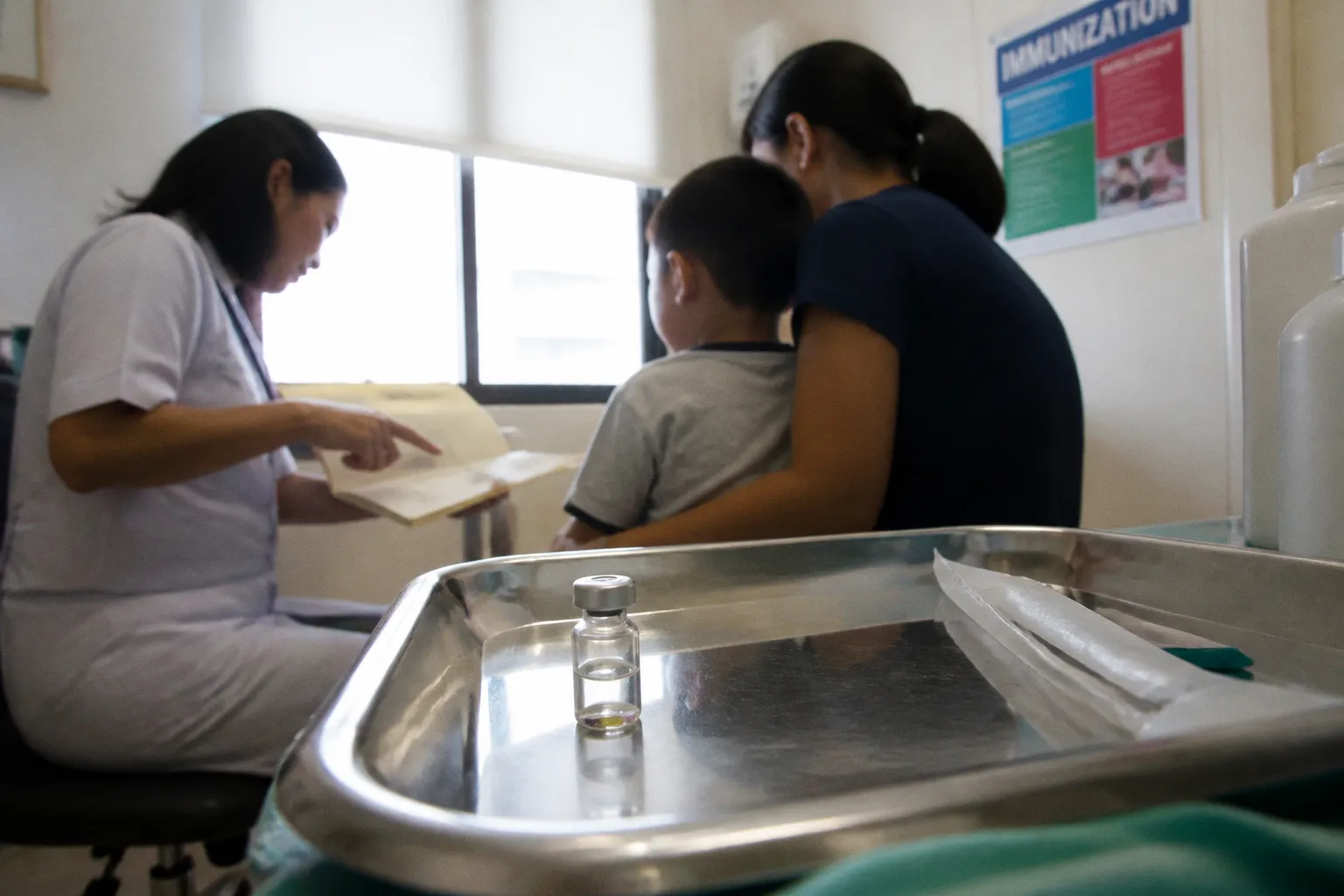
Inactivated vs live vaccines: safety pathways for immune-deficient children
For children with significant immune deficiency, the difference between an inactivated vaccine and a live attenuated vaccine is…
Curated clinical updates, research breakdowns, and expert perspectives focusing on specific pathways of childhood immune development and pathology.
For children with significant immune deficiency, the difference between an inactivated vaccine and a live attenuated vaccine is…
When I review the charts of asplenic children enrolled in our vaccine-response cohorts, the first thing that jumps out isn't a…
A positive vaccine titer does not necessarily mean that an immunocompromised child is protected. In children receiving IVIG or…
Every week in my clinic I see the same avoidable error: a child arrives at the rheumatology or oncology service ready to start a…
A delayed vaccine series is not automatically a failed vaccine series. For most children, CDC catch-up guidance is explicit: a…
The central safety problem is not that vaccines are inherently dangerous for children with immune disorders. It is that a…
According to St. Jude Children’s Research Hospital, the nationwide CARnation Consortium has begun assessments for CONQUER, a…
The choice between a maternal RSV vaccine and infant nirsevimab is not a simple preference between two equivalent products. It is…
A pediatric pre-transplant vaccine schedule is not simply a matter of bringing routine immunizations up to date. The clinical…
Starting a biologic or intensive immunosuppressive treatment in a child creates a narrow clinical planning window: we need to…
A child may complete chemotherapy with an apparently adequate vaccination history and still have incomplete protection against…
When a child has a primary immunodeficiency or another condition causing significant immune suppression, vaccination decisions…
Approximately 5% to 15% of vaccinated individuals do not reach the protective anti-HBs threshold after a primary hepatitis B…
Measles post-exposure prophylaxis is time-dependent. The MMR vaccine is generally used within 72 hours of initial exposure for…
Historical trials in children with sickle cell disease found that daily penicillin prophylaxis reduced pneumococcal infection by…
Rotavirus is one of the few routine pediatric vaccines that uses a live-attenuated oral product. The vaccine replicates briefly…
The routine pneumococcal conjugate vaccine pathway is a four-dose series at 2, 4, 6, and 12–15 months. Immunocompromised children…
After hematopoietic stem cell transplantation (HSCT), a child’s previous vaccine history cannot be treated as a permanent record…
RSV prevention for high-risk infants is governed by two time-dependent constraints: maternal vaccination must occur at 32–36…
A titer drawn two weeks after a vaccine series can look non-reactive. In an immunocompromised child, that single result might…
NICE just opened a therapeutic door I have been watching for years. On 14 August 2026, the institute published updated final…
The question of live vaccine timing after pediatric IVIG is not answered by a single number. The interval depends on the dose of…
Roughly a third of the pediatric patients referred to my trial coordination desk arrive at the immunosuppression threshold…
The minimum age for risk-based MenACWY vaccination can be 2 months. The minimum age for MenB and pentavalent MenABCWY vaccination…
For a child with anatomic or functional asplenia, vaccination is not simply a matter of completing the routine childhood series…
A child may have received every routine vaccine on schedule before cancer treatment and still need a carefully planned post-chemo…
For children with asthma, annual influenza vaccination is not optional risk management. Influenza can trigger acute…
For families living with an immunocompromised child, the rotavirus vaccine can create an uncomfortable contradiction. The infant…
A pneumococcal vaccine schedule for an immunocompromised child is defined by two variables: the child’s underlying risk condition…
A single dose of a long-acting monoclonal antibody such as nirsevimab provides passive protection against severe respiratory…
When parents or clinicians consider separating combination vaccines into individual injections, the discussion often begins with…
Vaccine titer testing for immunocompromised children can answer an important clinical question: has the child produced a…
A 76.9% reduction in severe acute respiratory infection (SARI) among infants was reported in one study when household contacts…