Pneumococcal immunization paths for high-risk kids
A pneumococcal vaccine schedule for an immunocompromised child is defined by two variables: the child’s underlying risk condition and the vaccine platform already used. The routine conjugate series is four doses at 2, 4, 6, and 12–15 months.
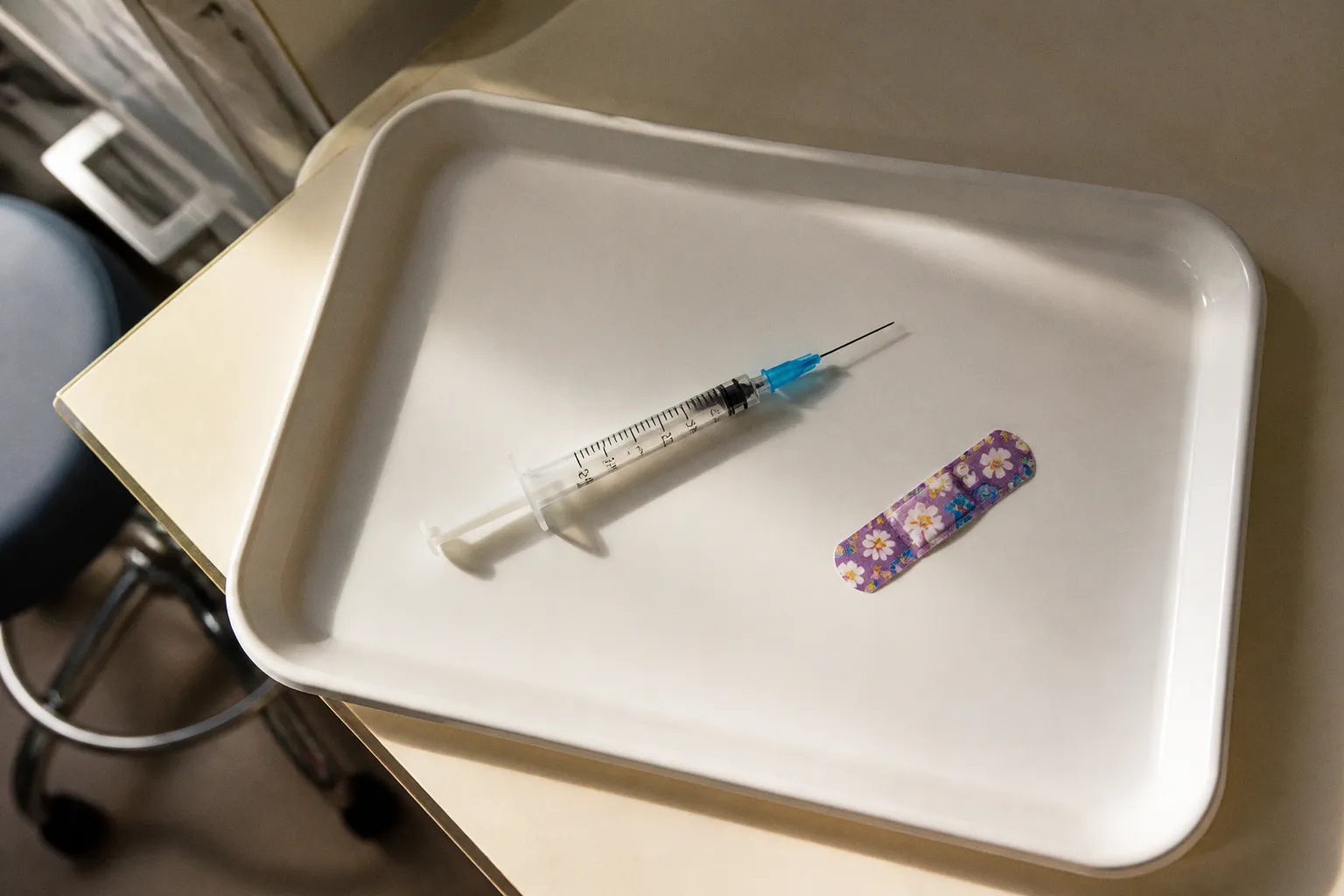
In high-risk children, the choice between PCV15 and PCV20 determines whether PPSV23 is added later.
The key interval is not optional: when PCV15 is used in an immunocompromising condition, PPSV23 is administered at least 8 weeks after the final PCV15 dose. A second PPSV23 dose may be indicated at least 5 years after the first. When PCV20 completes the relevant pathway, additional PPSV23 doses are generally not required.
The comparison is therefore not simply PCV15 versus PCV20 by valency. It is a comparison between two different immunization architectures: sequential conjugate-plus-polysaccharide coverage versus broader conjugate coverage with fewer downstream steps.
The vaccine platforms are not interchangeable
PCV15 and PCV20 are pneumococcal conjugate vaccines. PPSV23 is a pneumococcal polysaccharide vaccine. Their antigenic composition and immunologic behavior differ.
Conjugate vaccines link pneumococcal polysaccharides to a carrier protein. This supports a more structured immune response and establishes the basis of routine infant immunization. PPSV23 covers more serotypes than PCV15, but it is not a substitute for the primary conjugate series.
The practical distinction is:
- PCV15 covers 15 pneumococcal serotypes through a conjugate platform. In high-risk children, it is followed by PPSV23 to expand serotype coverage.
- PCV20 covers 20 serotypes through the conjugate platform. For children who receive PCV20 as the applicable high-risk pathway, PPSV23 is generally not added.
- PPSV23 covers 23 serotypes through a polysaccharide formulation. It is used as an additional layer after PCV15 in selected high-risk patients, not as a replacement for conjugate vaccination.
The higher number attached to PPSV23 does not make it the default first-line product. Valency is only one assay-independent feature of the schedule. Platform, sequence, age, prior doses, and underlying immune function determine clinical utility.
PCV15 plus PPSV23 is a sequential strategy. PCV20 is a broader conjugate strategy. The dose count alone does not define equivalence.
The historical development of pneumococcal vaccination explains why schedules now contain multiple products. PCV7 was introduced in 2000. PCV15 and PCV20 were initially approved for adults in 2021, followed by pediatric authorization of PCV15 in 2022 and PCV20 for children aged 6 weeks through 17 years in 2023. Current pediatric schedules are therefore built around newer conjugate products, not around simply extending older PCV7 pathways.
Which children require a tailored pneumococcal schedule?
The high-risk category is clinically heterogeneous. A child with congenital asplenia has a different pathophysiologic risk profile from a child receiving treatment for leukemia, but both conditions can impair protection against invasive pneumococcal disease.
The conditions identified in pediatric guidance include:
- congenital or acquired asplenia;
- sickle cell disease;
- chronic kidney disease from stage 2 onward;
- nephrotic syndrome;
- HIV infection;
- leukemia;
- lymphoma;
- primary immunodeficiency;
- solid organ transplantation.
These conditions affect immune defense through different mechanisms. Asplenia reduces splenic clearance of encapsulated bacteria. Hematologic malignancy and its treatment can alter B-cell, T-cell, and phagocyte function. HIV can impair cellular and humoral immune responses. Kidney disease and nephrotic syndrome may change both susceptibility and vaccine response. Transplantation introduces additional variables related to immunosuppressive therapy and timing.
The label “immunocompromised child” is therefore not a dosing instruction. It is a clinical category that triggers schedule review. The final pathway depends on age, diagnosis, transplant status, treatment exposure, and documented pneumococcal vaccine history.
A schedule reconstruction should identify:
- the child’s current age;
- every documented PCV dose and product;
- the interval between previous doses;
- whether PCV15 or PCV20 was used;
- whether PPSV23 has already been administered;
- the presence and type of immunocompromising condition;
- whether immunosuppressive treatment or transplantation changes the timing of vaccination.
Incomplete records create a separate diagnostic problem. The solution is not to infer product identity from a generic record entry. PCV13, PCV15, PCV20, and PPSV23 have different roles. An undocumented formulation can change the subsequent schedule.
Routine PCV protection remains the foundation
For children without a high-risk indication, routine pneumococcal vaccination uses PCV15 or PCV20 in a four-dose primary series:
| Dose | Routine age |
|---|---|
| Dose 1 | 2 months |
| Dose 2 | 4 months |
| Dose 3 | 6 months |
| Dose 4 | 12–15 months |
The high-risk pathway is built on this conjugate foundation. It does not eliminate the need for age-appropriate primary vaccination. A child with a primary immunodeficiency still requires a schedule that begins with the applicable conjugate vaccine sequence unless a clinician is reconstructing an interrupted or previously modified series.
Age changes the decision framework. The same product can have a different role depending on whether the child is completing an infant series, receiving catch-up vaccination, or entering a high-risk pathway between 2 and 18 years of age. Previous doses cannot be interpreted in isolation from the child’s current age and risk status.
The distinction matters because immunocompromised children may have a lower or less durable functional response even when the record shows that a dose was administered. That does not mean routine serologic testing replaces vaccination. It means the schedule is managed according to formal risk-based guidance rather than by assuming that a standard record has the same clinical meaning in every patient.
PCV15 followed by PPSV23: the sequential pathway
The PCV15 pathway uses two vaccine platforms in sequence.
First, the child receives the applicable PCV15 doses. Then PPSV23 is administered after the minimum interval. For children aged 2 through 18 years with an immunocompromising condition, the relevant interval after the final PCV15 dose is at least 8 weeks.
A second PPSV23 dose is administered at least 5 years after the first when indicated by the high-risk schedule. The five-year interval is part of the regimen. It is not a suggestion to compress the schedule when clinical appointments are convenient.
The sequence can be represented in clinical terms:
1. Complete or reconstruct the PCV15 pathway. The exact number and timing of doses depend on age and previous vaccination history.
2. Wait at least 8 weeks after the final PCV15 dose. This interval separates the conjugate series from the polysaccharide dose.
3. Administer PPSV23. This broadens coverage to additional pneumococcal serotypes.
4. If required, administer a second PPSV23 dose at least 5 years later. The interval is measured from the first PPSV23 dose.
The purpose of the sequence is complementary coverage. PCV15 establishes conjugate-mediated protection against 15 serotypes. PPSV23 then adds broader polysaccharide serotype coverage. The products are not redundant, and they should not be treated as interchangeable entries in a vaccine ledger.
Why the order matters
PPSV23 is not placed before PCV15 merely because it contains more serotypes. The conjugate vaccine is the anchor of the pediatric pathway. The polysaccharide vaccine is added afterward in selected high-risk patients.
Administration of PCV15 and PPSV23 during the same clinical visit is explicitly discouraged. Giving PPSV23 too close to the conjugate vaccine can blunt the immune response to conjugate vaccination. The schedule therefore has a biologic rationale, not only an administrative one.
The relevant error is often not a missed product but a compressed interval. A record may show that both vaccines were given, while the sequence and spacing determine whether the intended immune response was supported. For this reason, vaccine product names and administration dates have higher clinical value than a binary field marked “pneumococcal vaccine: yes.”
In high-risk pediatric vaccination, timing is part of the assay. A correct product given at the wrong interval does not represent the intended regimen.
PCV20: broader conjugate coverage with fewer steps
PCV20 changes the structure of the schedule by extending conjugate coverage to 20 pneumococcal serotypes. For a high-risk child who receives PCV20 as the applicable vaccine pathway, additional PPSV23 doses are generally not required.
This is the central operational difference in the PCV20 versus PCV15 plus PPSV23 pediatric comparison. PCV20 reduces the need to coordinate two vaccine platforms and removes the later five-year PPSV23 step from the standard high-risk pathway.
| Parameter | PCV15 pathway | PCV20 pathway |
|---|---|---|
| Primary platform | 15-valent conjugate vaccine | 20-valent conjugate vaccine |
| Additional product | PPSV23 after the final PCV15 dose | Generally none |
| Minimum interval after conjugate series | At least 8 weeks before PPSV23 | No PCV20-to-PPSV23 interval is routinely required because PPSV23 is generally not added |
| Later PPSV23 dose | A second dose may be indicated at least 5 years after the first | Generally not required |
| Main operational burden | Requires product sequencing and long-term interval tracking | Fewer downstream scheduling steps |
| Coverage logic | Conjugate protection followed by expanded polysaccharide coverage | Broader conjugate protection in one platform |
The simplified pathway does not mean that PCV20 is automatically appropriate for every child with any history of pneumococcal vaccination. Prior doses still matter. A child who received PCV15, PPSV23, or an older conjugate product requires record-based interpretation. The clinical question is not whether PCV20 is broader in isolation. It is whether it is the correct next product within the child’s existing sequence.
The same principle applies to clinical trials and observational comparisons. PCV20 and PCV15 followed by PPSV23 cannot be compared only by counting serotypes. Relevant endpoints include serotype-specific antibody concentrations, functional opsonophagocytic activity, seroresponse rates, durability, breakthrough invasive disease, and adverse-event profiles. Long-term real-world comparative data in rare primary immunodeficiencies remain limited. A broad label indication is not equivalent to a complete evidence base for every immunologic phenotype.
High-risk conditions alter the interpretation of protection
Vaccine efficacy is not a fixed patient-independent value. In pediatric immunology, observed protection depends on the interaction between the antigenic stimulus and the patient’s immune system.
A child with a primary immunodeficiency may receive the correct sequence but generate a weaker response. A child with leukemia may have a temporarily altered lymphocyte profile because of disease or treatment. A transplant recipient may have a timing constraint related to immunosuppression. A child with nephrotic syndrome may have additional clinical variables that affect infection risk and response durability.
This does not justify replacing guideline-based vaccination with ad hoc assay testing. It establishes the reason for specialist oversight.
The clinical record should separate three distinct questions:
- Was the correct vaccine product administered?
- Was it administered at the correct interval?
- Does the underlying condition require a modified or additional pathway?
A “yes” to the first question does not answer the other two. This distinction is especially important when children move between primary care, oncology, nephrology, transplant, infectious disease, and immunology services. Each service may document the vaccine encounter differently. The consolidated record must preserve formulation, dose date, age at administration, and risk indication.
PCV15 versus PCV20: where the practical difference appears
The PCV15 pathway is more complex because it requires a planned transition from a conjugate vaccine to PPSV23. The PCV20 pathway is operationally simpler because it provides broader conjugate coverage without routinely adding PPSV23.
The difference is most visible in four areas.
1. Scheduling complexity
PCV15 requires active interval management. The final PCV15 dose must be identified, the 8-week minimum interval must be calculated, and the potential second PPSV23 dose must be tracked over a five-year period.
PCV20 reduces these dependencies. That can be clinically useful for children with fragmented care, frequent hospital transfers, or a high risk of incomplete follow-up. It does not remove the need for accurate documentation, but it reduces the number of future product transitions.
2. Platform continuity
PCV20 keeps the pathway within the conjugate vaccine platform. PCV15 followed by PPSV23 moves from a conjugate formulation to a polysaccharide formulation.
That distinction matters when discussing immune response. A higher-valent conjugate product is not merely a polysaccharide vaccine with fewer antigens. The carrier-protein design affects how the immune system processes the antigen and how the response is characterized in immunogenicity studies.
3. Serotype coverage
PCV15 covers 15 serotypes. PCV20 covers 20. PPSV23 covers 23, but its use after PCV15 reflects a sequential strategy rather than evidence that the largest number should always be administered first.
Serotype coverage should be interpreted against circulating disease patterns, breakthrough infections, and the child’s immune phenotype. Serotype count alone is an incomplete surrogate for clinical protection.
4. Follow-up burden
PCV15 creates a future dependency: PPSV23 must be scheduled after the required interval, and a second dose may be due five years later. PCV20 generally removes that dependency.
This is not a minor administrative distinction. In high-risk pediatric care, missed follow-up is a predictable source of incomplete protection. A regimen with fewer transitions may have higher practical utility even when both pathways are clinically valid under guidance.
Timing errors that compromise the pathway
The most consequential mistakes are usually sequence and interval errors.
Administering PPSV23 too close to PCV15
PPSV23 should not be administered during the same visit as PCV15 in this high-risk sequence. The minimum interval after the final PCV15 dose is at least 8 weeks. The purpose is to avoid blunting the response to the conjugate vaccine.
Treating PPSV23 as a replacement for PCV15
PPSV23 expands serotype coverage but does not replace the conjugate foundation. A record containing PPSV23 does not automatically demonstrate completion of the pediatric conjugate pathway.
Adding PPSV23 after a completed PCV20 pathway by default
PCV20 already provides broad conjugate coverage against 20 pneumococcal serotypes. Additional PPSV23 is generally not required in the applicable high-risk pathway. Routine addition of PPSV23 after PCV20 would create a different regimen from the one described in current guidance.
Compressing the five-year interval
For children who require a second PPSV23 dose, the minimum interval is at least 5 years after the first. The five-year interval should be tracked from the documented administration date, not estimated from memory or from the date of the final PCV15 dose.
Treating older PCV7 doses as a complete modern pathway
PCV7 was an important earlier conjugate vaccine, but historical PCV7 doses should not be assumed to complete modern pneumococcal conjugate protection. The record requires reconstruction against the current product and risk-based schedule.
Ignoring the diagnosis behind the schedule
The same vaccine history can lead to different clinical actions in a healthy child and in a child with asplenia, HIV infection, leukemia, a primary immunodeficiency, or solid organ transplantation. Product history without risk classification is insufficient.
A technical framework for record review
A reliable review uses a compact set of variables rather than narrative interpretation.
| Variable | Required interpretation |
|---|---|
| Age | Determines the applicable pediatric schedule and catch-up context |
| Product | Distinguishes PCV15, PCV20, PPSV23, and older conjugate products |
| Dose date | Establishes interval compliance |
| Final PCV dose | Determines when the 8-week PPSV23 interval begins in the PCV15 pathway |
| PPSV23 history | Determines whether a later dose may be indicated |
| Risk diagnosis | Establishes whether enhanced pneumococcal coverage applies |
| Treatment status | May affect timing and expected immune response |
| Documentation quality | Determines whether the pathway can be reconstructed without assumptions |
This framework prevents a common error: reading a vaccine history as a list of names instead of as a time-dependent regimen.
For PCV15, the essential calculation is:
- identify the final relevant PCV15 dose;
- confirm an interval of at least 8 weeks before PPSV23;
- document the first PPSV23 date;
- assess the need for a second PPSV23 dose at least 5 years later.
For PCV20, the review is different:
- confirm that PCV20 was used in the applicable pathway;
- verify the preceding vaccine history;
- determine whether the child’s record contains an indication for additional action;
- do not add PPSV23 routinely when the completed pathway does not require it.
The distinction between “not routinely required” and “never clinically relevant” is deliberate. Individual cases may contain prior products, incomplete documentation, or unusual treatment circumstances that require specialist interpretation. The general pathway should not be converted into an absolute rule detached from the patient record.
Clinical utility is the endpoint
The preferred schedule is the one that provides the intended serotype coverage, uses an appropriate vaccine platform, respects immune-response intervals, and remains executable across the child’s care network.
PCV15 plus PPSV23 offers a sequential method: conjugate priming followed by expanded polysaccharide coverage, with a possible second PPSV23 dose after five years. Its weakness is operational complexity. It requires more products, more interval calculations, and longer-term follow-up.
PCV20 offers broader conjugate coverage with fewer downstream steps. Its operational profile is simpler, and PPSV23 is generally not required after the applicable PCV20 pathway. Its limitation is not a routine need for additional PPSV23, but the continuing requirement to interpret the child’s existing vaccination history correctly.
For an immunocompromised child, the pneumococcal vaccine schedule is therefore a controlled sequence, not a product checklist. The clinically relevant variables are specificity of the indication, accuracy of product identification, interval integrity, and the immune phenotype of the patient. Any comparison that omits those variables is incomplete.
The rigid assessment is straightforward:
- PCV15 is appropriate when the clinical pathway uses sequential conjugate and polysaccharide coverage.
- PPSV23 must follow PCV15 by at least 8 weeks and may require a second dose at least 5 years later.
- PCV20 generally avoids the need for subsequent PPSV23 in the applicable high-risk pediatric pathway.
- Same-visit PCV15 and PPSV23 administration is discouraged.
- Prior vaccination history and immunocompromising diagnosis determine the final schedule.
That is the route clinicians and families must preserve: correct product, correct sequence, correct interval, and no assumptions based solely on serotype count.