Vaccine antibody persistence in pediatric transplant recipients
A positive vaccine titer before transplantation is useful. It is not a permanent credential.
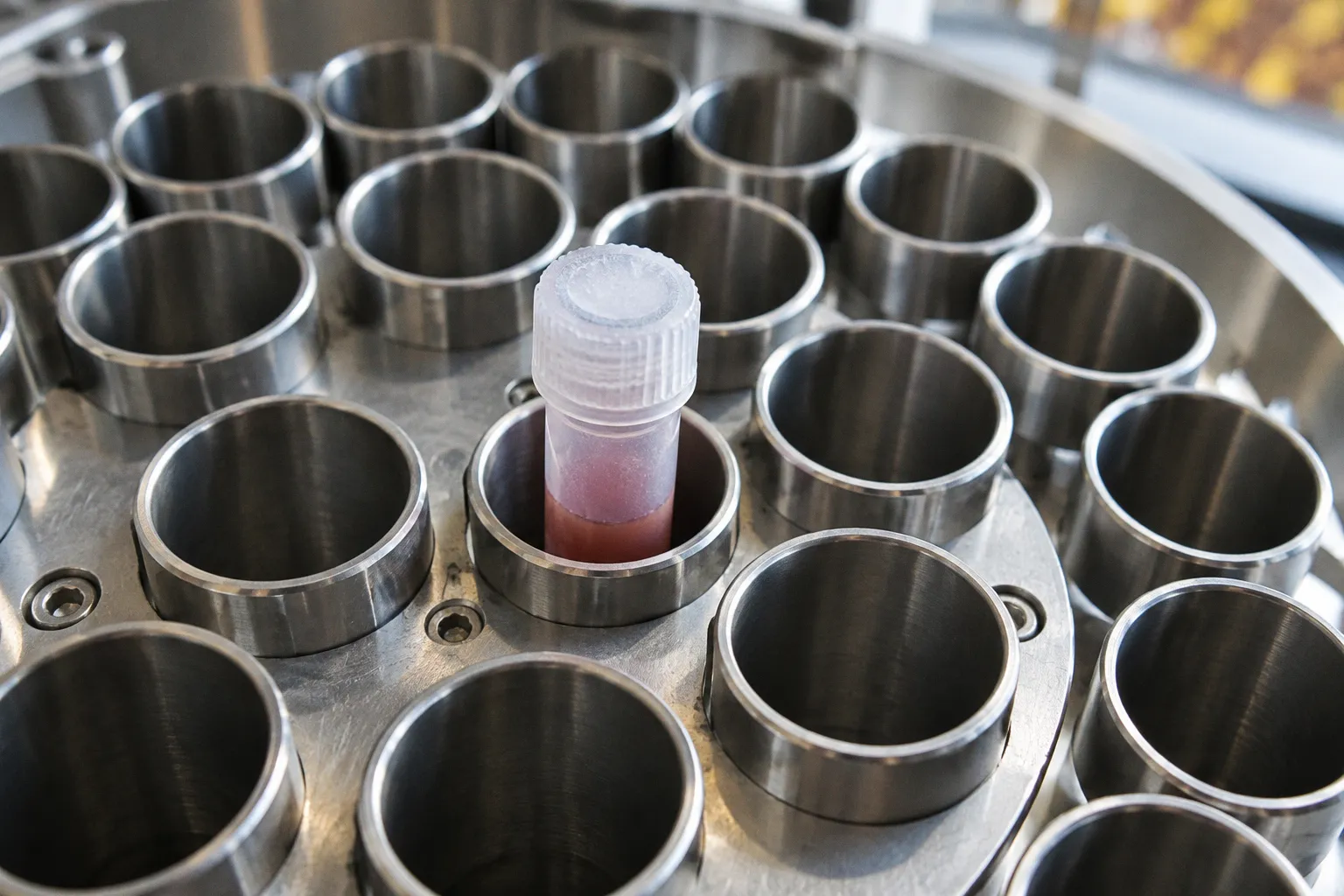
In pediatric solid organ transplant (SOT) and hematopoietic stem cell transplant (HSCT) recipients, vaccine-induced antibodies can decline faster than they do in immunocompetent children because of conditioning regimens, immunosuppressive therapy, altered immune reconstitution, and the underlying disease itself. A child may enter transplantation with documented protection and later have a serological profile that no longer supports the same level of confidence.
That is the practical answer to the question of how to check vaccine antibody persistence in pediatric transplant recipients: establish a pre-transplant baseline, repeat targeted serology after transplantation, interpret the result alongside the child’s transplant history and immunosuppressive regimen, and treat revaccination as a clinical decision rather than an automatic response to one laboratory number.
In my experience running clinical cohorts, the weak point is rarely the laboratory assay alone. The weak point is the assumption that one titer, measured once, can describe a changing immune system.
Start with a pre-transplant serological baseline
Pre-transplant testing has two jobs. First, it identifies existing immunity before the child enters a period of intensified immunosuppression. Second, it helps the clinical team distinguish between immunity that was present before transplantation and immunity that may be generated later through vaccination or natural exposure.
The diseases commonly included in baseline assessment are:
- Hepatitis B virus, with quantitative anti-HBs testing.
- Hepatitis A virus, where clinically relevant.
- Varicella-zoster virus.
- Measles, mumps, and rubella.
- Other vaccine-preventable infections selected according to the child’s age, transplant type, vaccination history, epidemiological exposure, and local protocol.
For hepatitis B, an anti-HBs concentration above 10 IU/mL is recognized as the threshold confirming immune protection in the pre- or post-transplant setting. That threshold is clinically useful, but it should not be mistaken for a universal definition of complete protection against every infection. Antibody concentrations are one component of the assessment; cellular immunity, exposure intensity, vaccine history, and the timing of immunosuppression also matter.
The baseline result should be documented with enough context to remain interpretable later. A laboratory report that simply says positive or negative is less useful than a record showing:
1. The exact assay and quantitative result, where available.
2. The date of blood collection.
3. The date and formulation of the relevant vaccine doses.
4. Whether the child had recent immunoglobulin administration.
5. The planned transplant type and expected immunosuppressive pathway.
6. Any history of prior infection or incomplete vaccination.
This is not administrative excess. A titer without timing is a weak clinical endpoint. If a child received a vaccine shortly before testing, the result may reflect a recent immune response. If the test was performed after a long interval, it may indicate waning rather than primary non-response. Those are different problems and do not have the same solution.
The pre-transplant window is short for a reason
Vaccination before transplantation is generally preferable when the child can mount an adequate response and there is sufficient time for immunity to develop.
The available evidence and consensus recommendations distinguish between vaccine categories:
| Vaccine category | Practical pre-transplant timing | Clinical rationale |
|---|---|---|
| Inactivated vaccines | Ideally at least 2 weeks before transplantation | Allows time for antibody generation before intensified immunosuppression |
| Live vaccines | At least 4 weeks before transplantation | Provides a safety interval and time for an immune response before transplant |
The distinction is not cosmetic. Live vaccines carry different safety considerations in patients approaching transplantation, and they require eligibility screening rather than routine administration. Timing must be coordinated with the transplant team, because the available window may be constrained by organ failure, donor availability, chemotherapy, or urgent listing.
A pre-transplant vaccine series may therefore be incomplete. The correct response is not to treat the incomplete schedule as evidence of failure. It is to record what was given, identify the remaining doses, and decide whether the clinical timeline supports additional vaccination before transplantation.
Immunosuppression changes the durability of protection
The central problem after transplantation is not simply whether the child responded to the vaccine. It is whether that response persists under altered immune conditions.
Immunosuppressive regimens frequently accelerate the decline of vaccine-induced antibody titers compared with healthy immunocompetent children. The speed and extent of waning vary by vaccine, transplant type, treatment intensity, time since transplant, and the degree of immune reconstitution. A single post-transplant measurement therefore provides a snapshot, not a forecast.
For SOT recipients, ongoing immunosuppression can affect both the generation and maintenance of vaccine responses. For HSCT recipients, the immune system may be rebuilt from a donor-derived hematopoietic compartment, making previous vaccine history an unreliable substitute for post-transplant reassessment. The child’s immune history has not simply continued uninterrupted; it has passed through a period of biological disruption.
This is why a pre-transplant positive titer should not be carried forward indefinitely as proof of current protection. It may still be relevant, particularly as part of the child’s record, but it cannot answer what the antibody level is now.
A pre-transplant positive titer is a baseline, not a lifetime guarantee.
What should trigger concern?
There is no single universal post-transplant interval that applies to every vaccine type, every transplant population, and every immunosuppressive regimen. That uncertainty matters. A protocol that schedules the same blood test for every child regardless of vaccine and transplant history may look standardized while producing clinically uneven information.
The team may consider repeat serology when:
- The child had documented immunity before transplantation but has undergone prolonged or intensive immunosuppression.
- A vaccine-preventable infection would carry substantial clinical risk.
- The child is being considered for revaccination or a booster.
- The post-transplant vaccination series has been completed and the team needs to assess response.
- There is a history of an inadequate vaccine response.
- The child is approaching a setting with high exposure risk, such as school or an outbreak environment.
- The result would change management rather than merely add another laboratory value.
The last point is the most important. Testing should be connected to a decision. If a result will not alter vaccination, infection-prevention planning, or specialist review, its clinical value may be limited.
How to check vaccine antibody persistence in pediatric transplant recipients
A workable monitoring pathway has four stages.
1. Define what immunity is being assessed
The first question is not which blood test to order. It is which disease protection matters for this child.
Hepatitis B is often assessed through quantitative anti-HBs testing, with a concentration above 10 IU/mL recognized as the protection threshold. For measles, mumps, rubella, varicella, and hepatitis A, the relevant serological assays may differ in format, reporting conventions, and interpretation. A result reported as positive, negative, or equivocal may not be directly comparable across laboratories.
The clinical team should define whether the objective is:
- Confirming pre-transplant immunity.
- Evaluating loss of detectable antibody.
- Measuring response after a vaccine dose or series.
- Deciding whether revaccination is reasonable.
- Supporting an infection-prevention plan when antibody protection is uncertain.
That objective determines the testing strategy.
2. Establish the reference result
The baseline should be drawn from the most clinically meaningful point available, preferably before transplantation and before major immunosuppressive treatment when circumstances allow. If the child’s vaccination record is incomplete, serology may help fill gaps, but it should not be treated as a perfect reconstruction of vaccine history.
The record should distinguish between:
- Immunity documented before transplantation.
- Antibody detected after a vaccine administered before transplantation.
- Antibody detected after post-transplant vaccination.
- Antibody associated with prior infection.
- An undetectable or equivocal result in a child whose vaccination history is uncertain.
This distinction becomes important when interpreting a later decline. A low titer after transplantation may reflect waning of a previous response, inadequate primary response, assay variation, or an immune system that was never able to generate durable protection.
3. Repeat serology at a clinically relevant point
Post-transplant serology should be timed to the vaccination plan and the child’s immune status. The exact universal interval is not established for all vaccine antigens, and long-term antibody durability beyond five to ten years after some post-transplant live-vaccine strategies remains uncertain.
For that reason, the schedule should be individualized rather than presented as a rigid calendar. Factors include:
- The time elapsed since transplantation.
- Current immunosuppressive medications and doses.
- Evidence of immune reconstitution in HSCT recipients.
- Recent vaccine administration.
- The disease risk associated with loss of protection.
- The feasibility of acting on the result.
- Whether the child has had an exposure or is entering a higher-risk environment.
In research studies of selected pediatric liver and kidney transplant recipients, serology was assessed one year after administration of live viral vaccines such as measles-mumps-rubella and varicella. That one-year assessment is informative, but it should not be misread as a universal monitoring endpoint for every pediatric transplant recipient.
4. Interpret the result with the transplant team
A titer below a recognized threshold can support a revaccination discussion. It does not automatically dictate the same intervention for every patient. The team must weigh the child’s current immune status, the vaccine type, the transplant protocol, the risk of the disease, and the safety profile of the proposed vaccine.
This is especially important for live viral vaccines. Studies published in recent years have evaluated measles-mumps-rubella and varicella vaccination in carefully selected pediatric liver and kidney transplant recipients. Those studies do not establish that live vaccines are appropriate for all transplant recipients. Eligibility depends on strict screening, including the level and stability of immunosuppression and specialist oversight.
A clinical protocol that converts every negative antibody result into immediate vaccination is too crude. The same is true of a protocol that refuses to revisit vaccine protection after transplantation because the child had adequate pre-transplant titers.
Revaccination is a decision, not a laboratory reflex
The usual logic is straightforward: if antibody protection has declined, consider additional vaccination. The clinical reality is more conditional.
For inactivated vaccines, revaccination or booster strategies may be considered when post-transplant serology shows inadequate protection, particularly for infections with meaningful morbidity in immunocompromised children. The response may be less robust than in healthy children, and the result may need to be reassessed after vaccination.
A post-vaccination titer can answer whether detectable antibody is present at that point. It cannot guarantee durable protection over the following years. Antibody levels may fall again under continuing immunosuppression, which is why the monitoring plan must account for the possibility of repeated loss of seroprotection.
For live vaccines, the threshold for proceeding is higher. The potential benefit of preventing measles, varicella, or another vaccine-preventable infection must be balanced against the risk of vaccine-associated disease in a child whose immune control is insufficient. This is a specialist decision, not a routine catch-up maneuver.
The significance of the 75% figure
Observational cohort data have reported a post-kidney-transplant pediatric diphtheria seroprotection rate of approximately 75%, using a benchmark of at least 0.1 IU/mL. That number demonstrates the problem clearly: a substantial proportion of children may retain protection, but not all do.
It does not provide a universal expected rate for every transplant population. It should not be used to predict an individual child’s result, and it does not establish that the remaining children are protected against all vaccine-preventable diseases. The cohort, antigen, assay threshold, and clinical context matter.
This is where statistical significance and clinical significance can diverge. A study may show a measurable post-vaccination antibody response in a selected cohort, yet the response may still be too inconsistent, too short-lived, or too dependent on narrow eligibility criteria to support broad clinical use.
The meaningful endpoint is not whether a study produced an antibody response. It is whether protection remains credible when the child encounters the infection.
Live vaccines require an eligibility screen, not optimism
Live measles-mumps-rubella and varicella vaccines occupy a difficult position in pediatric transplantation. They can be clinically valuable because the infections they prevent may be severe in immunocompromised children. They also carry safety concerns when administered to patients with inadequate immune control.
The available multicenter research in selected pediatric liver and kidney recipients is important because it addresses a long-standing evidence gap. However, the study population is not interchangeable with the entire transplant community. Selection criteria are part of the result. If participants had minimal ongoing immunosuppression, stable graft function, and specialist evaluation, those conditions cannot be removed from the interpretation.
Before a live vaccine is considered, the clinical team generally needs to review:
- Transplant type and time since transplantation.
- Current immunosuppressive agents and their intensity.
- Graft function and recent complications.
- Evidence of immune recovery or immune competence.
- Recent infections and exposure history.
- Prior vaccine doses and serological results.
- The possibility of receiving a safer inactivated alternative, where one exists.
- The consequences of delaying vaccination.
The relevant endpoint is not merely seroconversion. Safety outcomes and adverse events must be tracked with the same seriousness as antibody persistence. A vaccine that generates antibodies but creates unacceptable clinical risk is not a successful intervention.
The evidence base also has a time horizon problem. One-year post-vaccination serology can demonstrate persistence through that period, but it does not answer how long protection lasts beyond five or ten years. Long-term durability remains an open question for some post-transplant live-vaccine strategies. Regulatory hurdles and limited cohort sizes make broad extrapolation premature.
Why antibody titers do not equal complete immunity
Antibody testing is attractive because it is measurable. It produces a number, a cutoff, or a laboratory category. Clinical immunity is more complicated.
Antibodies are one arm of the immune response. T-cell-mediated immunity can contribute to protection even when antibody levels are low or difficult to interpret. Conversely, the presence of antibodies does not guarantee that a child will avoid infection, develop no symptoms, or experience no complications. This is particularly relevant when the exposure is intense or the immune system is substantially suppressed.
Several limitations should remain visible in the final clinical interpretation:
- Antibody thresholds are disease- and assay-specific.
- A positive result does not guarantee complete clinical immunity.
- Antibody titers can wane under immunosuppression.
- Laboratory assays are not always directly interchangeable.
- A negative result may reflect waning, non-response, timing, or assay limitations.
- Cellular immunity is not captured by routine antibody testing.
- The child’s exposure risk and current treatment may matter as much as the numerical titer.
- Long-term durability data remain incomplete for several post-transplant vaccination strategies.
This is also why the phrase vaccine efficacy must be used carefully. Efficacy endpoints in a clinical study may include seroconversion, geometric mean antibody concentrations, or the proportion above a predefined threshold. Those endpoints are important, but they are not identical to prevention of clinical infection in everyday life.
A trial with statistical significance for an antibody endpoint has not necessarily demonstrated durable real-world protection. The gap between immunogenicity and clinical effectiveness is especially consequential in children whose immune systems are being actively altered by transplantation and immunosuppressive therapy.
Building a monitoring plan that can survive real clinical care
A useful plan should be specific enough to guide action but flexible enough to reflect the child’s changing status.
At minimum, the record should connect each serological result to:
1. The vaccine antigen being measured.
2. The assay and numerical value or interpretation.
3. The date of testing.
4. The date and number of vaccine doses.
5. The transplant date and transplant type.
6. Current immunosuppressive treatment.
7. Any recent infection, exposure, or immunoglobulin administration.
8. The clinical decision that follows from the result.
That final field is often missing. A test is ordered, the result is filed, and no one documents whether it changes management. This creates the appearance of surveillance without the discipline of a monitoring program.
For families, the practical route is to ask the transplant and immunology teams to clarify four points:
- Which vaccine-preventable diseases are being monitored?
- What threshold does the team use for each assay?
- When will titers be repeated, and why at that interval?
- What action would follow an inadequate result?
The answer will not always be a booster. It may be additional testing, delayed vaccination, enhanced exposure precautions, review of immune recovery, or no immediate intervention if the result does not change the risk assessment.
The child’s school environment may also influence the plan. Herd immunity in schools can reduce exposure pressure, but it is not a substitute for individual protection. Outbreaks, local vaccination coverage, household contacts, and school policies can shift the practical risk quickly. The monitoring plan should therefore be revisited when the child’s environment changes, not only when a scheduled laboratory date arrives.
A sober interpretation of the evidence
The evidence supports routine attention to vaccine antibody persistence in pediatric transplant recipients. It does not support a one-size-fits-all schedule, automatic reliance on pre-transplant titers, or indiscriminate use of live vaccines.
The strongest approach is a layered one:
- Establish immunity before transplantation when time and clinical status permit.
- Administer inactivated vaccines ideally at least two weeks before transplantation.
- Administer live vaccines at least four weeks before transplantation only when clinically appropriate.
- Repeat targeted serology after transplantation because immunosuppression can accelerate antibody waning.
- Use disease-specific thresholds, including the anti-HBs protection threshold above 10 IU/mL for hepatitis B.
- Treat low or absent titers as a prompt for specialist interpretation, not an isolated command.
- Evaluate vaccine efficacy through both immunogenicity and safety endpoints.
- Avoid claiming complete immunity from a positive antibody result.
- Keep long-term durability and cellular immunity limitations visible.
In practical terms, how to check vaccine antibody persistence in pediatric transplant recipients is less about ordering every possible test and more about preserving the chain of evidence from vaccine dose to laboratory result to clinical decision. That chain is where many protocols become vague.
My verdict is deliberately cautious: post-transplant serology is an essential navigation tool, but it is not a map of the entire immune system. It can identify waning protection, support carefully timed revaccination, and expose gaps that would otherwise remain hidden. It cannot remove the uncertainty created by immunosuppression, replace clinical judgment, or turn a selected clinical trial cohort into a universal treatment recommendation.
The right endpoint is not a reassuring number on a laboratory report. It is a defensible, continually updated assessment of whether this particular child is likely to remain protected when protection matters.