Clinical trial enrollment: hidden barriers for pediatric patients
Only about 10% of patients who meet the formal inclusion and exclusion criteria for a clinical trial ultimately enroll. In pediatrics, that gap is not a minor operational inconvenience.
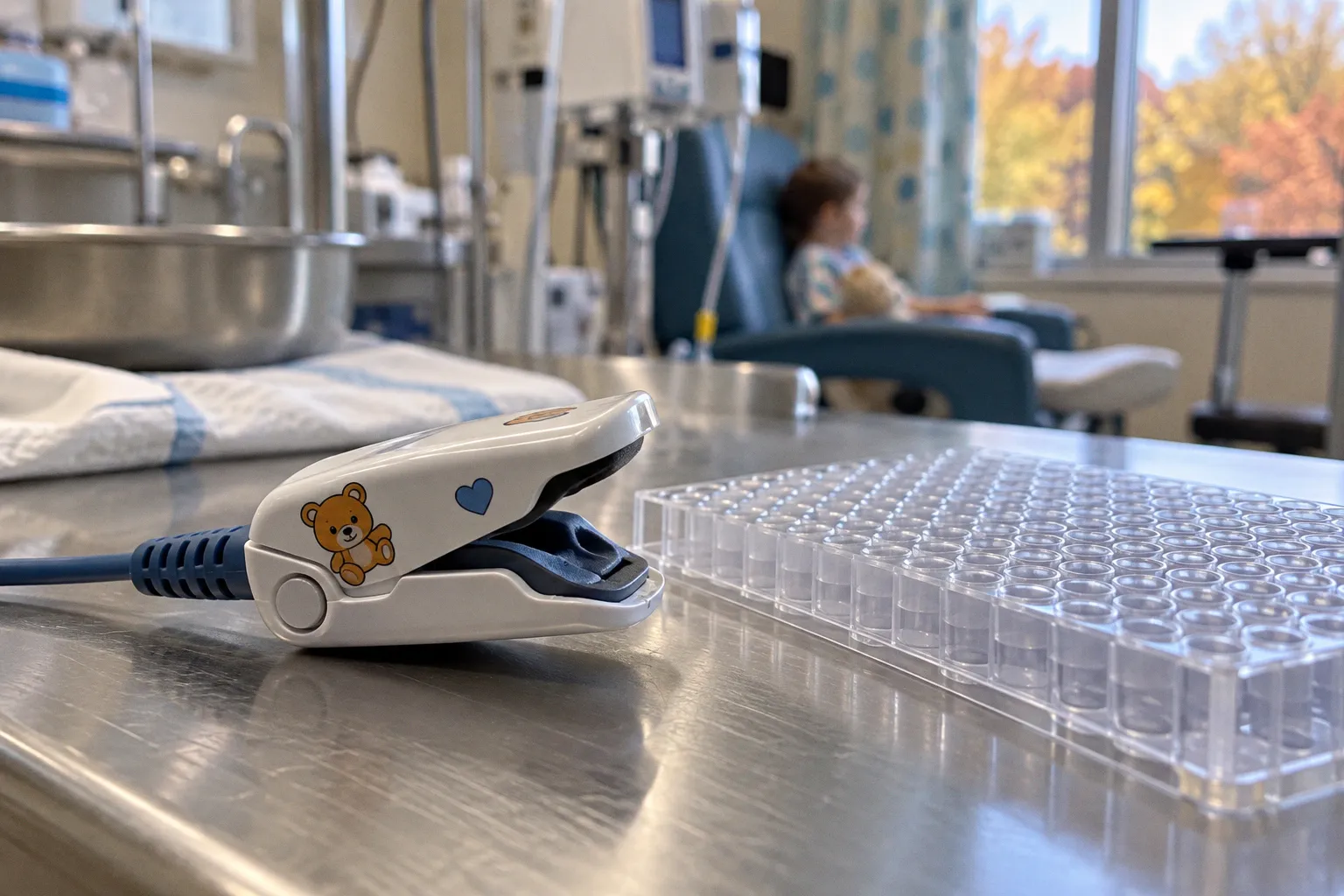
It changes the cohort before the first dose is administered, often removing children whose disease, geography, family circumstances, or prior treatment history make participation difficult.
The result is a familiar contradiction in pediatric drug development: a protocol may be scientifically rigorous on paper while producing evidence from a narrow and unusually well-resourced subset of children. That matters in immunotherapy, biologics, gene therapy, immunoglobulin replacement studies, and trials involving rare immunodeficiencies, where the eligible population is already small. A highly selective enrollment process can leave investigators with statistical significance that does not translate cleanly into real-world pediatric care.
I have spent enough time reviewing cohorts and protocol assumptions to be skeptical of the phrase “eligible patient.” Eligibility is a technical designation. It is not the same as being able to participate.
The enrollment gap: why most eligible children never enter a study
Pediatric clinical trial enrollment is often presented as a parental decision. That framing is incomplete and, in many cases, misleading. Parents may decline participation, but families also disappear from the process long before consent is discussed. They may live too far from the research site, lack reliable transport, be unable to take time away from work, or find the visit schedule incompatible with school and caregiving responsibilities.
Some are screened out by criteria that are defensible for internal trial control but poorly aligned with clinical practice. Others cannot complete the required laboratory testing, imaging, washout periods, or baseline observation windows. In rare pediatric immunodeficiency, the child may meet the disease definition but have a prior infection, ongoing prophylaxis, an incomplete vaccination history, or a treatment exposure that excludes them from the protocol.
The enrollment funnel therefore narrows at several points:
1. Disease recognition: The child must first be diagnosed or referred to a center capable of identifying the condition.
2. Referral and access: The family must reach a site participating in the trial.
3. Pre-screening: Medical records are assessed against the protocol’s eligibility criteria.
4. Formal screening: The child undergoes tests, visits, and treatment-history verification.
5. Consent and assent: Parents or legal guardians provide permission, while the child’s age and capacity determine whether assent is also required.
6. Randomization or treatment assignment: Only then does the child become part of the evaluable cohort.
Every stage creates attrition. Published research estimates that roughly 30% of patients may drop out after enrollment, while nearly half of pediatric clinical trials fail to complete or remain unpublished. Around 80% of clinical trials experience delays of at least one month, and only about 6% finish on schedule.
Those figures are not interchangeable. A delayed trial is not necessarily a failed trial, and an unpublished trial may have been completed but never reported. Still, together they expose a structural problem: pediatric protocols are frequently designed as if recruitment, retention, and family logistics were secondary variables. They are not. They are part of the trial’s feasibility and, ultimately, part of the evidence quality.
A child can be medically eligible and still be practically excluded. The protocol has to account for both facts.
The consequences are especially serious when the trial targets a small cohort. In a pediatric gene therapy study for a severe immune disorder, losing several participants may affect the interpretability of efficacy endpoints. In a biologic trial, uneven retention can distort exposure-response analysis. In an immunoglobulin replacement study, missed visits or incomplete infusion records may make it difficult to distinguish treatment failure from inadequate follow-up.
This is why enrollment performance should be treated as more than a recruitment metric. It is a potential source of selection bias.
Regulatory drivers versus real-world recruitment
The modern pediatric trial system was built partly in response to a legitimate problem: children were historically treated with medicines that had not been adequately studied in children. The Best Pharmaceuticals for Children Act, introduced in 2002, and the Pediatric Research Equity Act, introduced in 2003, helped create stronger incentives and requirements for pediatric evidence.
Those regulatory mechanisms have improved the expectation that pediatric pharmacology and safety cannot simply be inferred from adult data. But regulatory pressure does not automatically produce a workable protocol. More than two-thirds of active pediatric clinical studies are driven by mandatory requirements under PREA. That does not mean the science is unimportant. It means the original reason for conducting a study may be regulatory rather than a direct response to the most urgent clinical question.
That distinction affects trial design.
A regulatory study may be built around a narrow age band, a predefined formulation, or a pharmacokinetic endpoint needed for approval. A clinician treating children with immune disorders may need answers about broader questions:
- Can the therapy be administered safely to children with prior serious infections?
- How does it perform in patients receiving prophylactic antimicrobials or immunoglobulin replacement?
- Does the treatment reduce hospitalization or severe infection over a clinically meaningful period?
- How does the adverse-event profile differ across developmental stages?
- Can families realistically maintain the dosing and monitoring schedule?
- What happens when the child misses a visit because of an acute illness?
These questions are not always captured by the primary endpoint.
In my experience, the most revealing part of a protocol is often not the headline efficacy endpoint but the operational detail surrounding it. A trial can be statistically elegant and operationally unrealistic. It can have a carefully calculated sample size while depending on a referral network that does not exist. It can demand repeated travel from families whose children are medically fragile, then interpret missed visits as a retention failure rather than a predictable consequence of the design.
The regulatory hurdle is therefore not just obtaining authorization to study a therapy. It is building a study that produces evidence relevant to the population regulators and clinicians will eventually need to treat.
The problem with rigid eligibility criteria
Eligibility screening for pediatric trials has to protect children. That principle is not negotiable. A child with unstable organ function, an uncontrolled infection, or a serious contraindication should not be enrolled merely to improve recruitment numbers.
The problem arises when criteria become broader in language than in clinical logic. A protocol may exclude a large number of children for reasons that reduce biological variability but also remove the patients most likely to receive the therapy after approval.
Common exclusion pressures in pediatric immunotherapy and immune deficiency research include:
- prior exposure to a similar biologic or investigational agent;
- recent use of immunoglobulin, corticosteroids, antimicrobial prophylaxis, or other immune-modifying treatment;
- a history of severe infection that is considered a confounding event;
- incomplete vaccination records;
- abnormal laboratory results that are common in the target disease;
- coexisting conditions that are frequent in medically complex children;
- inability to complete a washout period without increasing clinical risk;
- age limits that do not match the actual distribution of disease;
- restrictions related to previous transplantation or cellular therapy.
Each criterion may have a rationale. The cumulative effect can still be exclusionary.
For pediatric clinical trial enrollment, the central question is not whether an eligibility rule is strict. It is whether the rule is necessary, measurable, and connected to a meaningful safety or efficacy concern. If the answer is unclear, the criterion may be functioning as a convenience filter.
How exclusion criteria change the cohort
Consider a trial for an immune-modulating therapy. If children with recent infections are excluded, the resulting cohort may appear safer than the routine clinical population. If children receiving immunoglobulin replacement are excluded, investigators may end up studying immune function in children who are less clinically severe than those who need regular replacement therapy. If prior biologic exposure is prohibited, the trial may not reflect the treatment sequence used by specialists.
The data can remain internally valid while becoming less externally valid.
That distinction is frequently lost in promotional summaries. A therapy may demonstrate a favorable safety profile, but the denominator matters. Were the children at highest risk included? Were those with the most complex treatment histories represented? Were adverse events evaluated across the same spectrum of comorbidity expected in practice?
A protocol should not be judged only by how clean its cohort looks. Excessive cleanliness can be a warning sign.
| Protocol feature | Why investigators use it | What it can remove from the cohort |
|---|---|---|
| Narrow age range | Reduces developmental and pharmacokinetic variability | Children who are clinically relevant but just outside the specified band |
| Exclusion of prior immune-modifying therapy | Limits treatment interactions and confounding | Patients with more severe or treatment-resistant disease |
| Long washout period | Creates a clearer baseline | Children who cannot safely stop standard care |
| Frequent in-person visits | Improves monitoring and data completeness | Families living far from the site or managing complex schedules |
| Exclusion after abnormal laboratory results | Reduces safety uncertainty | Children whose baseline abnormalities are part of the disease itself |
| Strict vaccination requirements | Limits infection risk | Children with incomplete vaccination histories because of immune compromise |
The same issue appears in clinical trial exclusion criteria for children who have acute or recurrent infections. Excluding an unstable infection may be medically appropriate. Excluding any child with a recent infection may produce a cohort that does not reflect the disease burden the therapy is intended to address.
The solution is not to remove safety criteria. It is to distinguish between risks that require exclusion and risks that can be managed through stratification, additional monitoring, dose modification, or a separate analysis cohort. That requires protocol design informed by pediatric specialists, families, statisticians, and pharmacovigilance experts—not only by the sponsor’s preferred operational model.
Consent, assent, and the logistics of family participation
Informed consent challenges in pediatric trials are often reduced to a question of parental willingness. The actual process is more demanding.
Parents are asked to understand an intervention that may have limited prior pediatric data, uncertain long-term outcomes, and a risk profile that is still being defined. In gene therapy or cellular therapy studies, the information may involve irreversible or potentially durable biological effects. In immunotherapy trials, families may need to weigh the possibility of immune-related adverse events against a disease that is already imposing substantial clinical risk.
The consent discussion must separate several ideas that are often blurred:
- the difference between research and individualized treatment;
- the distinction between a trial’s primary endpoint and a guaranteed clinical benefit;
- the known adverse events and the events that remain uncertain;
- the possibility of placebo or standard-of-care assignment, where applicable;
- the time commitment required beyond the dosing visit;
- the implications of long-term follow-up;
- the circumstances under which participation may be paused or withdrawn.
Children who are able to understand the study may also be asked for assent. That does not convert them into adult decision-makers, but it does recognize that pediatric participation is not ethically neutral simply because a parent signs the consent form.
Operational burden can undermine consent quality. When a family arrives after a long journey, has missed work, and is under pressure to make a rapid decision before a screening window closes, the formal consent process may be compliant while the practical decision environment is poor. The issue is not necessarily misconduct. It is protocol design.
A realistic study gives families time to discuss participation, ask questions, and understand that declining will not endanger their access to standard care. It also explains what happens when a child becomes ill, misses a visit, or cannot complete a test. Those details affect retention more than optimistic recruitment language does.
Socioeconomic and geographic barriers are part of the evidence
Systematic review findings identify low parental socioeconomic status, minority background, and geographical distance—including rural residence—as significant barriers to pediatric trial enrollment. Higher parental education is associated with improved participation, but that should not be interpreted as a justification for shifting the burden onto families to navigate complex research systems independently.
A trial with one urban academic site is not automatically a national pediatric study. It is a study of the children who can reach that site, absorb the cost of participation, and remain available for the required schedule.
The burden may include:
- repeated travel for laboratory testing and specialist assessment;
- accommodation near the research center;
- time away from work or school;
- childcare for siblings;
- coordination with local physicians;
- management of acute illness between scheduled visits;
- translation or interpretation needs;
- documentation requirements that families find difficult to obtain;
- uncertainty about reimbursement and other participation costs.
These issues become more pronounced in rare pediatric immunodeficiency, where expert centers are concentrated geographically. A family may need to travel not because the child’s care is unusually experimental, but because the trial is available only at a small number of institutions with the necessary laboratory infrastructure.
Remote procedures can reduce some of this pressure, but telemedicine is not a universal solution. It cannot replace every physical examination, infusion, imaging study, immune-function assay, or adverse-event assessment. A decentralized design that shifts testing to local facilities can also introduce variation in laboratory methods and sample handling. The operational simplification may create a data-quality problem.
The better approach is deliberate hybrid design. Trial teams can identify which assessments genuinely require a specialist site and which can be performed locally under standardized procedures. They can coordinate research visits with clinically necessary appointments rather than adding duplicate travel. They can build realistic windows around school calendars and common pediatric illnesses. They can also involve community clinicians so that participation does not require every clinical decision to move to the trial center.
None of this is charity. It is methodology.
If a protocol systematically excludes families who cannot absorb its logistical demands, the final cohort may have different baseline health, adherence patterns, socioeconomic circumstances, and access to supportive care than the broader patient population. That can affect both safety outcomes and efficacy endpoints.
Recruitment equity is not a public-relations layer added after protocol design. It is a condition of producing generalizable pediatric evidence.
Retention: the endpoint most protocols underestimate
Enrollment receives attention because it determines whether a trial can start. Retention receives less attention because it appears after the press release, the first dose, and the initial recruitment milestone. Yet a dropout rate of approximately 30% is a major threat to interpretation.
In pediatric immune research, dropout is rarely a single event with a single cause. Families may leave because the child’s condition changes, the treatment burden becomes too high, the family relocates, standard therapy is needed, or repeated adverse events make continued participation unacceptable. Some participants are lost after missed visits, while others withdraw because the protocol no longer fits their medical circumstances.
These are not equivalent outcomes.
A child who discontinues because of an adverse event should not be treated as an ordinary administrative loss. A participant who misses one visit but remains clinically followed is different from a participant who disappears from the study. A protocol that classifies all departures under one broad retention metric loses information that could reveal safety or feasibility problems.
Retention analysis should therefore examine at least four dimensions:
1. Time to discontinuation: When in the study do families leave? Early exits may indicate consent or tolerability problems, while later attrition may reflect cumulative logistics.
2. Reason for discontinuation: The study should distinguish adverse events, lack of efficacy, family burden, protocol violations, disease progression, and loss to follow-up.
3. Pattern of missed assessments: Repeatedly missed laboratory visits may indicate an unrealistic schedule rather than poor commitment.
4. Availability of outcome data after withdrawal: Some participants may consent to continued safety follow-up even if they stop the investigational therapy.
Retention strategies are not interchangeable with incentives. Financial support may reduce direct burden, but it cannot repair a protocol that requires unnecessary hospital visits or poorly coordinated testing. Practical measures are often more important: flexible scheduling, clear contact pathways, local laboratory partnerships, transport support, and rapid communication when a child develops an infection or adverse event.
The protocol should also be honest about the therapy’s monitoring burden. In immunotherapy, adverse events may require urgent evaluation, repeated blood tests, or temporary treatment interruption. In cellular and gene therapy, long-term follow-up may extend well beyond the active treatment period. Families need to understand this before enrollment, not after the first complication.
Building pediatric protocols that can answer the clinical question
The strongest pediatric trial is not the one with the most restrictive protocol. It is the one that controls genuine safety risks without excluding the children whose care the therapy is supposed to improve.
That requires alignment between the scientific question and the operational design. A few principles are particularly useful.
Define the population before optimizing the statistics
Sample-size calculations are necessary, but they cannot compensate for a cohort that is clinically unrepresentative. Investigators should define which children the therapy is intended for in practice, then determine which differences require stratification and which truly justify exclusion.
A study of a biologic for immune dysregulation may need separate analyses by age, prior therapy, disease severity, or baseline immune function. That is more informative than excluding every child who complicates the dataset.
Separate safety monitoring from unnecessary exclusion
When a risk can be managed through additional visits, laboratory monitoring, dose adjustment, or an independent safety cohort, blanket exclusion may be excessive. The decision should be supported by a clear rationale and documented in the protocol, rather than inherited from adult trials without pediatric validation.
Children are not simply smaller adult participants. Their immune systems, organ function, medication exposure, and developmental needs change over time. Pediatric dosing and safety monitoring require age-appropriate pharmacology, not weight-based reduction of adult assumptions.
Design around ordinary pediatric disruption
Children get infections, miss school, and have changing schedules. A protocol that treats every deviation as a major violation will lose participants and generate misleading adherence data.
Visit windows should reflect the clinical reality of pediatric care. The study should specify what happens when a child is temporarily unwell, when a test is delayed, or when a local physician must intervene. Clear contingency plans reduce both family anxiety and protocol departures.
Measure outcomes that matter beyond the trial site
A surrogate endpoint may be appropriate for an early-phase study, but development should move toward outcomes with clinical meaning: serious infection frequency, hospitalization, need for replacement therapy, functional status, quality of life, and durable immune recovery where relevant.
Statistical significance is not the same as clinical usefulness. A change can meet a prespecified threshold while offering little practical improvement for children and families. Conversely, a rare-disease trial may be underpowered for conventional statistical certainty but still provide important evidence when the endpoint is well chosen and the cohort is carefully characterized.
The answer is not to lower evidentiary standards casually. It is to interpret the evidence in context, disclose uncertainty, and avoid presenting exploratory signals as established efficacy.
Plan publication and follow-up before recruitment begins
Nearly half of pediatric trials fail to complete or remain unpublished. That is not merely a missed academic opportunity. Families have accepted risk, investigators have used scarce clinical resources, and future patients may be exposed to avoidable uncertainty.
A credible protocol includes a plan for reporting results regardless of whether the primary efficacy endpoint is positive. Long-term follow-up should be treated as part of the study’s scientific obligation, particularly for therapies with durable biological effects.
A route through the enrollment process for families and clinicians
Families considering participation do not need to become trial statisticians. They do need a clear route through the protocol. The most useful questions are specific:
- What is the primary efficacy endpoint, and when will it be measured?
- Which adverse events are already known, and which risks remain uncertain?
- What treatments or prior exposures could exclude the child?
- How many visits are required, and which can occur locally?
- What happens if the child develops an infection or misses an appointment?
- Is long-term follow-up required after treatment ends?
- What costs are reimbursed, including travel and accommodation?
- Can the child continue standard care if the family declines or withdraws?
- How will the study team communicate results and safety updates?
Clinicians referring children should ask a parallel set of questions. Does the trial cohort resemble the patients seen in practice? Are children with prior immunoglobulin replacement, recurrent infection, transplantation, or complex comorbidity represented? Are exclusion criteria driven by a documented safety concern or by convenience? What is the plan for participants who discontinue treatment but still require follow-up?
These questions expose the difference between a trial that is merely recruitable and one that is clinically useful.
The sober verdict on pediatric enrollment
Pediatric clinical trial enrollment criteria pitfalls are not limited to one sponsor, one disease, or one therapy class. They are built into a system that must satisfy regulatory requirements, protect children, generate analyzable data, and operate across unequal healthcare environments.
The current numbers are difficult to dismiss: only about 10% of apparently eligible patients enroll, approximately 30% may drop out, most trials experience delays, and only a small minority finish on time. Those figures do not prove that pediatric research is failing. They show that feasibility and representativeness are being treated too late in the process.
For immunotherapy and advanced pediatric therapies, the stakes are higher. A small cohort can produce attractive efficacy signals while concealing how the treatment performs in children with prior therapies, complex immune histories, limited access to specialist care, or the ordinary disruptions of family life. Adverse events may be accurately reported yet still underrepresent the children most vulnerable to them.
My position is straightforward: a protocol should earn confidence through transparent cohort construction, clinically meaningful endpoints, realistic logistics, and complete reporting—not through a clean-looking eligibility table or a statistically significant headline.
The route forward is not to weaken pediatric protections. It is to stop confusing protection with exclusion. A well-designed trial can be cautious without being detached from practice, rigorous without being needlessly narrow, and efficient without transferring its operational burden to families. Until more pediatric studies meet that standard, enrollment will remain not just a recruitment problem, but a limitation on what the evidence can honestly tell us.