Screening Newborn Blood Spots for Genetic Cancer Predisposition Markers
8% of children who developed solid or central nervous system malignancies before age 8, according to findings published in Nature.
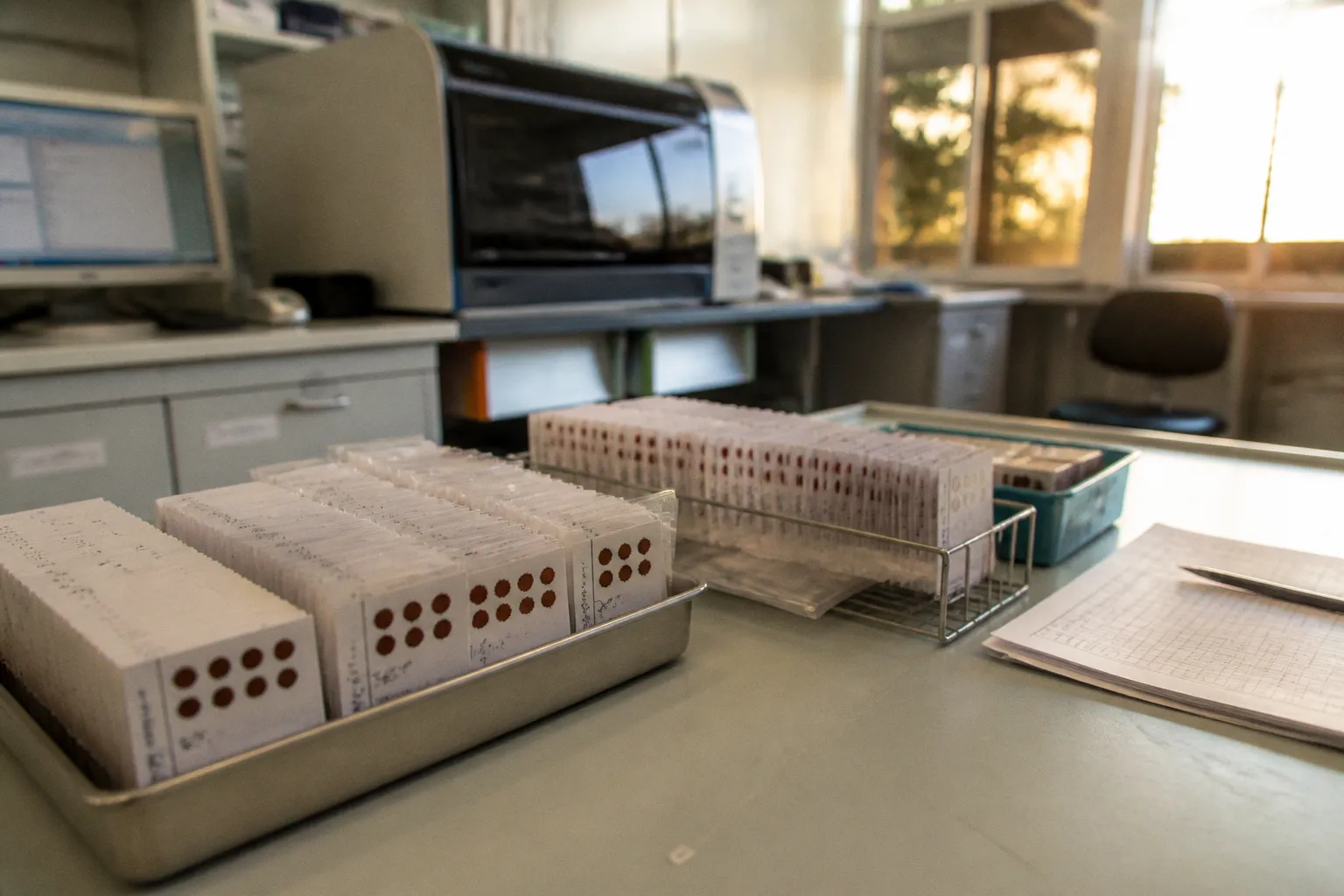
A retrospective analysis of archived newborn dried blood spots (DBS) identified pathogenic or likely-pathogenic (P/LP) germline variants in 11 cancer predisposition genes in 6.8% of children who developed solid or central nervous system malignancies before age 8, according to findings published in Nature. The Michigan birth cohort (1987–2020) screened 1,948 cases against a defined 11-gene panel, yielding a population-level detection signal of approximately 1 case of early-onset malignancy with an identifiable P/LP variant per 27,000 newborns.
Targeted Panel vs. Broader Approaches
The assay interrogated only 11 cancer predisposition genes — RB1, TP53, SMARCB1, WT1, RET, SUFU, PTCH1, DICER1, APC, PHOX2B — using DNA extracted from residual DBS. By design, the strategy trades the breadth of whole-exome or whole-genome sequencing for higher per-base coverage on a curated set of high-effect loci. The panel composition reflects gene–tumor specificity demonstrated in the cohort, not a comprehensive screen for all pediatric cancer-predisposition syndromes. Variants in genes not included on the panel would be invisible to this methodology.
Detection Yield and Gene–Tumor Mapping
P/LP variants concentrated in two genes: RB1 (n=69) and TP53 (n=24), together accounting for the majority of positive calls. Germline variant prevalence reached 100% in medullary thyroid carcinoma cases and 40% in retinoblastoma cases. Five additional tumor types showed 11–30% P/LP prevalence, with gene–tumor specificity reported at p<0.001. The same P/LP variants were rare or absent in matched healthy newborn comparison datasets and in gnomAD reference populations, supporting their pathogenicity rather than benign population polymorphism.
Clinical Utility Assessment
The data support a defined clinical proposition: a narrowly scoped, DBS-compatible targeted assay can identify a meaningful fraction of children at genetic risk before cancer onset. Key operational parameters remain to be established — turnaround time, variant classification concordance with orthogonal methods, cost per screened newborn, and infrastructure for genetic counseling follow-up. Pretest consent frameworks, variant reclassification protocols over time, and equity of access across populations have not been quantified in this study. The 6.8% detection rate applies strictly to children who developed malignancy; the predictive yield in a general newborn population is currently undetermined.