Integrating Genomic Screening into Newborn Care to Detect Early Cancer Risks
Medical Xpress reports that pathogenic or likely pathogenic variants in 11 pediatric cancer-predisposition genes were found in 132 of 1,948 children who later developed a solid or brain tumor by age…
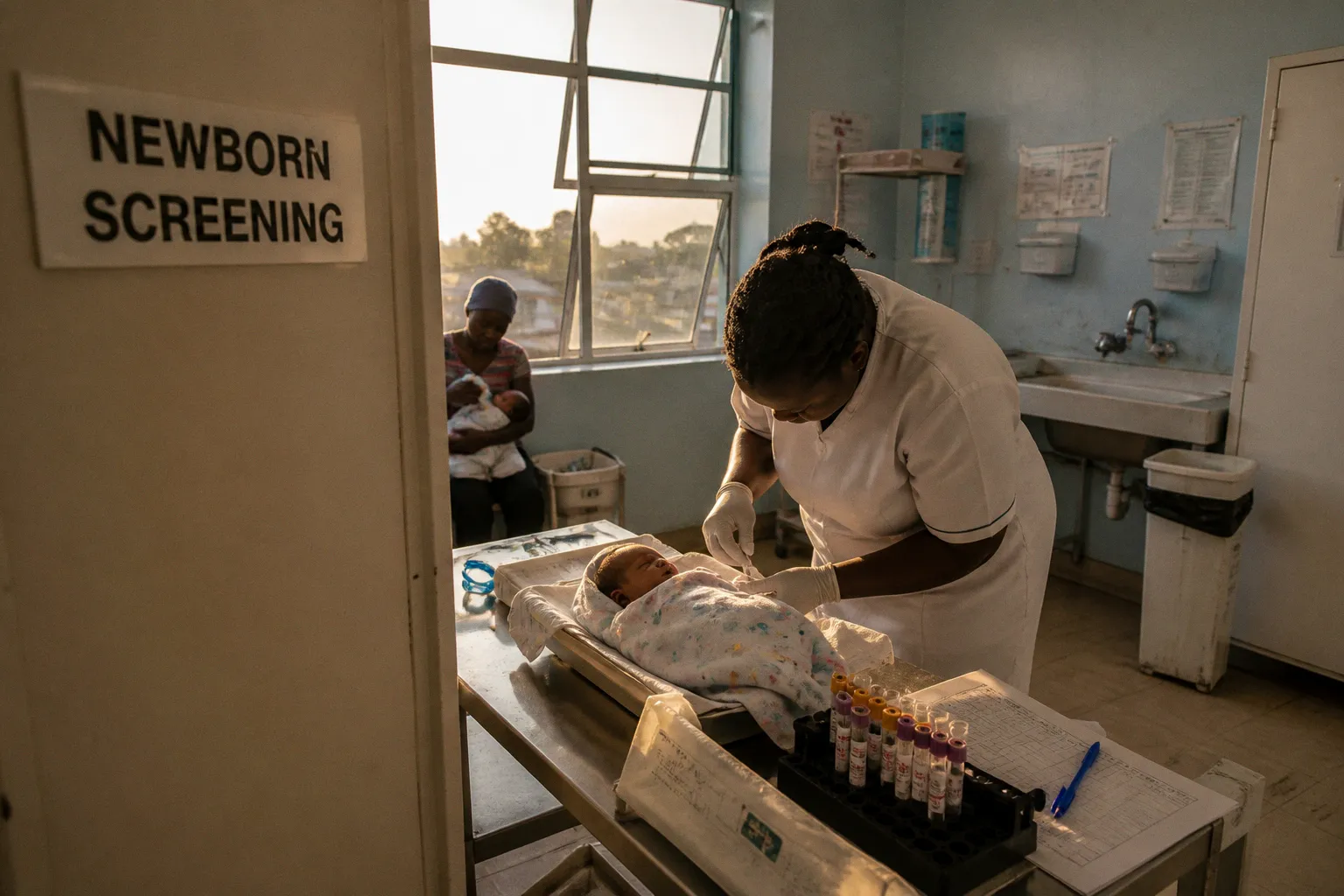
Medical Xpress reports that pathogenic or likely pathogenic variants in 11 pediatric cancer-predisposition genes were found in 132 of 1,948 children who later developed a solid or brain tumor by age 8—nearly 7% of the study group. The findings indicate that sequencing DNA from routine heel-stick blood spots could identify some children at elevated risk before symptoms appear. For pediatric immunology and diagnostics, the key issue is not a cancer diagnosis at birth, but the feasibility of adding genomic risk detection to an existing newborn-screening workflow.
What the assay detected
The study was led by researchers at Dana-Farber/Boston Children’s Cancer and Blood Disorders Center and Mass General Brigham. Investigators analyzed archived dried blood spots from children born in Michigan who subsequently developed cancer.
The genomic panel targeted 11 genes associated with pediatric cancer-predisposition syndromes. Variants were classified as pathogenic or likely pathogenic. The reported result was:
- 1,948 archived newborn samples analyzed.
- 132 children with a pathogenic or likely pathogenic variant.
- Nearly 7% of the study group carrying one of the detected variants.
- Tumor outcomes included solid tumors and brain tumors diagnosed by age 8.
The samples were originally collected through the standard heel-stick procedure used in U.S. newborn screening. Routine screening currently relies on biochemical tests for selected rare and treatable disorders. Cancer-risk assessment is not generally included because it requires DNA sequencing.
Why this matters clinically
A positive genomic result would not establish that a child has cancer. It would indicate a possible inherited or newly arising predisposition requiring confirmation, genetic assessment, and a syndrome-specific surveillance protocol.
The proposed clinical pathway is therefore different from conventional diagnostic testing:
1. DNA sequencing identifies a pathogenic or likely pathogenic variant.
2. The result is confirmed and interpreted in the appropriate clinical context.
3. The child enters surveillance designed for the relevant cancer-predisposition syndrome.
4. Tumors, or potentially pre-tumor changes, may be detected before symptoms develop.
The potential benefit is earlier detection. The source report notes that earlier-stage disease could sometimes be treated with less toxic therapy and improved outcomes. However, those benefits depend on the validity of the variant interpretation and the availability of a defined surveillance protocol. Sequencing alone is not a treatment and does not provide a complete risk assessment.
The study design also limits how the percentage should be interpreted. The analysis focused on children already known to have developed tumors. The nearly 7% figure is therefore not a prevalence estimate for all newborns. It describes the proportion of this selected cancer-associated study group in whom the panel detected relevant variants.
Implementation constraints
The report describes genomic newborn screening as a potential public-health intervention, not an established universal program. Researchers estimate that implementation could identify about 1,000 children annually in the United States who might benefit from earlier detection and treatment. That estimate remains dependent on program design, assay performance, follow-up capacity, and clinical validation.
For families and clinics, the practical questions would include:
- Which genes and variant classes are included in the panel?
- What confirmatory testing is required after a positive result?
- Who provides genetic counseling and pediatric oncology referral?
- Which surveillance protocol applies to each detected syndrome?
- How are uncertain findings handled?
- What documentation is provided for future clinical care?
The clinical utility is strongest where a detected variant has a validated association with childhood cancer and where surveillance is already defined. The evidence supports feasibility of sequencing archived heel-stick samples in a selected population. It does not yet establish that genomic newborn screening should be routinely applied to every newborn, nor that every detected variant will lead to a clinically actionable intervention.