Refining Pediatric Drug Allergy Testing: New EAACI Standards for Skin Sensitivity
When a child reacts to a medication in the clinic, our next move depends on how reliably we can test for the suspected allergy.
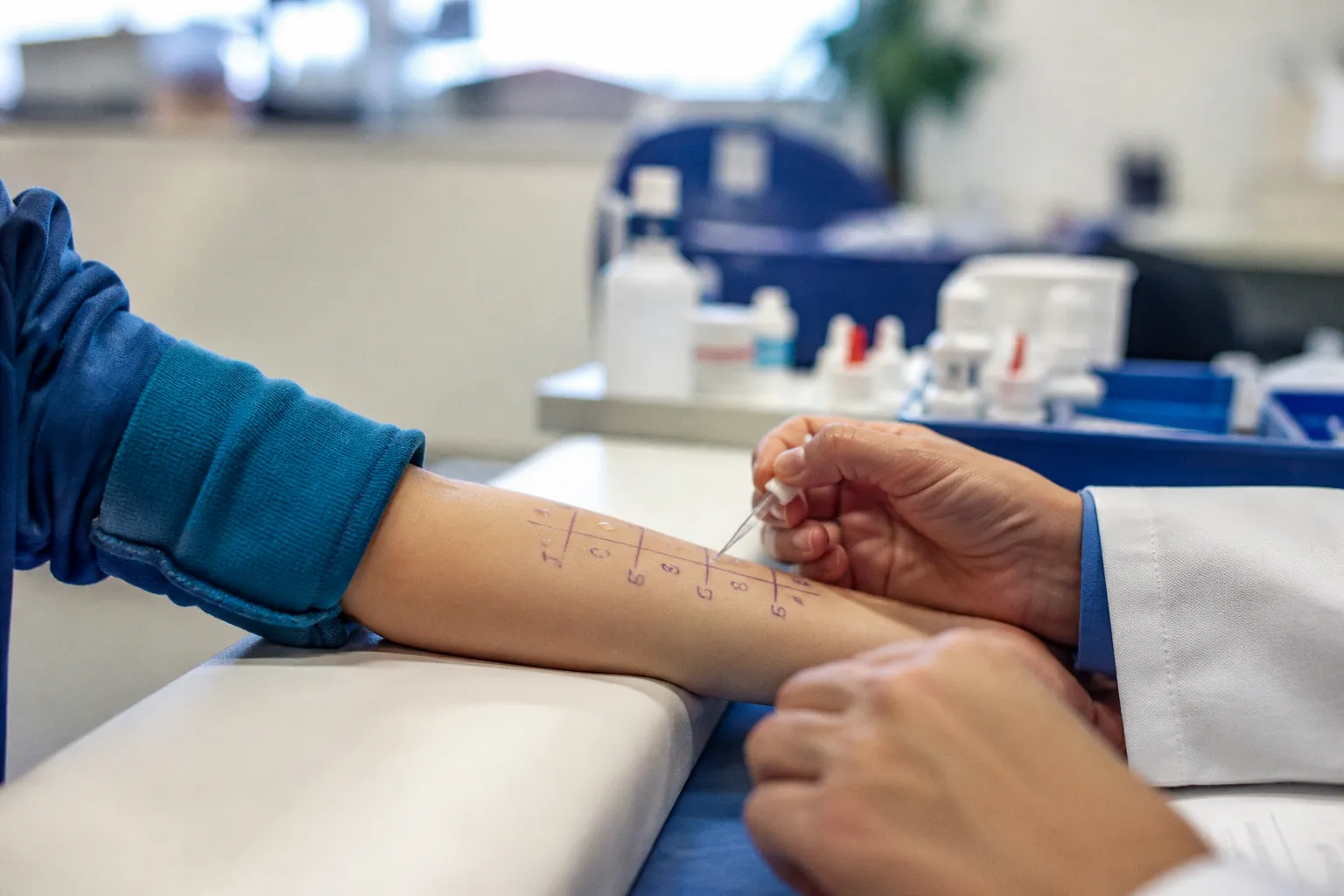
The European Academy of Allergy and Clinical Immunology (EAACI) has now published an updated statement on drug hypersensitivity skin testing, giving clinicians a standardized methodology and, crucially, refreshed non-irritative concentrations across several drug classes. For pediatric practice, this is one of those quiet guideline updates that genuinely changes the bedside conversation.
What the statement actually delivers
The document consolidates how skin testing for suspected drug hypersensitivity should be performed — from preparation and timing relative to the index reaction, through to the selection of positive and negative controls. The core clinical gain sits in the non-irritative concentration tables. Skin test reagents that are too concentrated produce false-positive wheals simply because they irritate the skin, and a child can end up labeled allergic to a drug they actually tolerate. The updated EAACI concentrations are intended to reduce that noise and bring everyday testing closer to a shared, evidence-anchored reference.
For you at the bedside, the practical implication is straightforward: when you document a "negative" or "positive" skin test result, the threshold you are reading against now has a more clearly defined basis. That matters most when the drug in question is a first-line antibiotic, an anesthetic, a chemotherapeutic, or a biologic — situations where avoidance driven by an irritant false-positive carries a real downstream cost for the child's future treatment options.
Where this fits in a pediatric management pathway
Drug hypersensitivity workups are rarely a single-step decision. We typically move through a structured sequence: careful history, in vitro testing where appropriate, skin prick and intradermal tests at validated concentrations, and only then a supervised drug challenge. The EAACI update touches the middle of that pathway, but the effect ripples outward. Cleaner test results feed into better challenge decisions, which in turn protect children from being unnecessarily labeled allergic to penicillins, cephalosporins, or other agents they may genuinely need later in life.
If your service runs a pediatric drug allergy clinic, this is a sensible moment to audit the local skin test panel against the updated EAACI non-irritative concentrations, and to flag any reagents where your working dilution still sits above the recommended threshold. A small change in reagent preparation can translate into a noticeable shift in the false-positive rate and, with it, fewer children carrying an avoidable "allergy" label into adulthood.
Adjacent research worth noting
Alongside the EAACI update, a study published in Rheumatology offers a comparative analysis of juvenile- and adult-onset dermatomyositis, drawing out clinical and immunological differences between the two cohorts. It does not directly revise the skin testing guidance, but for those of us balancing autoimmune and inflammatory diseases in pediatric practice, it is a useful reminder that juvenile-onset disease is not simply an earlier copy of the adult form — and that the management pathway has to be age-aware from the very first consultation.