Home SCIG Therapy: Pre-Start Checklist for Families
The data supporting home subcutaneous immunoglobulin therapy in pediatric primary immunodeficiency is no longer in dispute.
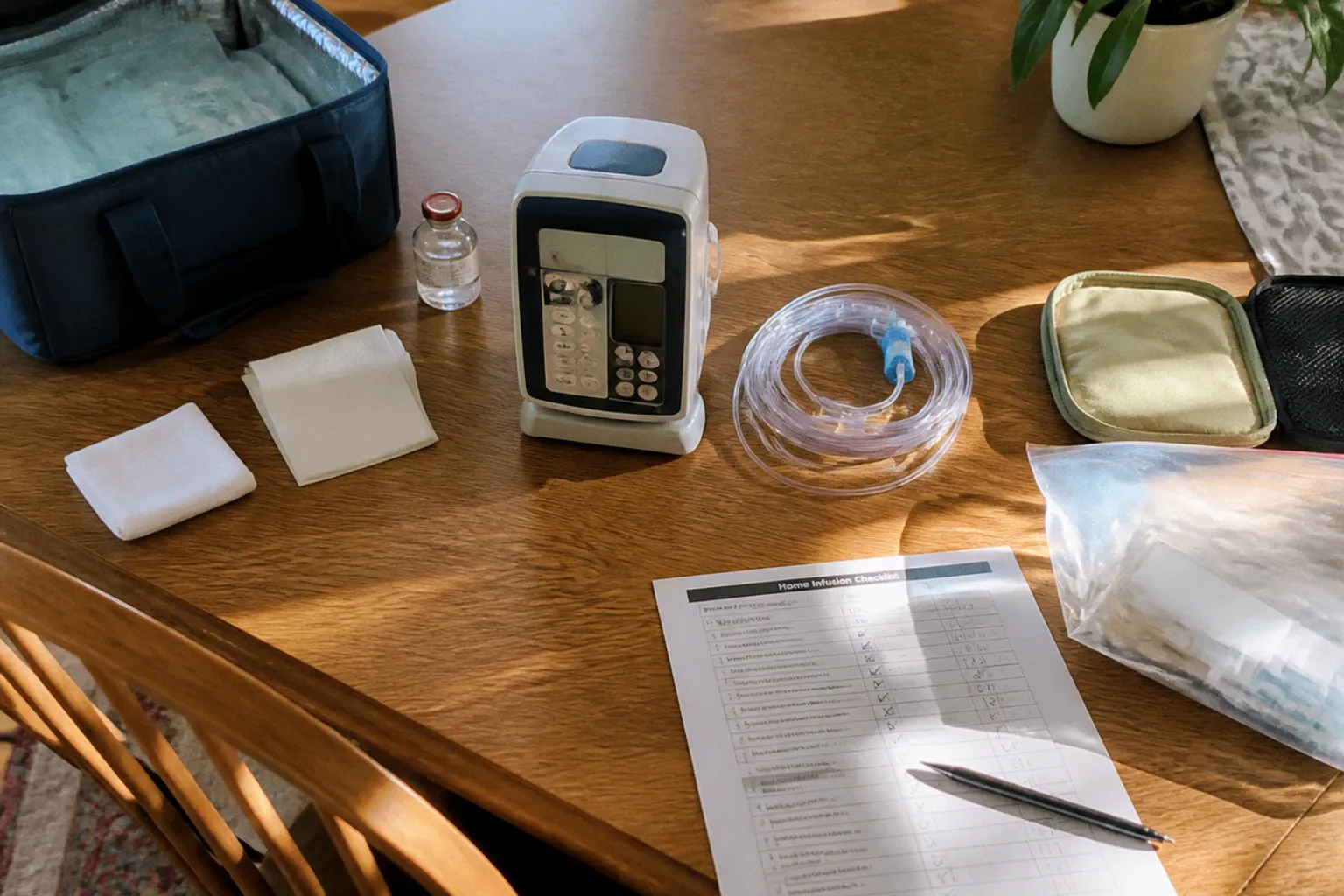
Cohort studies over the past decade have shown that subcutaneous administration maintains stable serum IgG troughs at least as well as hospital-based IVIG, with a fraction of the systemic adverse events and a meaningful reduction in serious bacterial infections across pediatric cohorts. Regulatory frameworks have caught up; payer pathways exist; specialty pharmacies ship the product. The transition itself, however, is where I see clinical protocols quietly underperform. The home infusion checklist is the unglamorous operational layer that determines whether the published efficacy actually translates to the kitchen table.
A home SCIG program is not a convenience upgrade. It is a controlled clinical procedure moved outside the controlled setting, and it demands the same competency assessment we apply in clinic.
Establishing the Home Environment and Safety Protocols
The single non-negotiable I want every family to internalize before the first vial is opened: subcutaneous immunoglobulin must never, under any circumstance, be administered into a blood vessel. This rule overrides every other operational decision. The entire home setup exists to make IV administration physically impossible and to keep the procedure recoverable if something goes wrong.
Two hard requirements from the published home infusion protocols:
- A parent or legal representative who has completed the formal caregiver education must be physically present for the entire infusion. "Present in the house" is not sufficient.
- A working telephone must be at the infusion location throughout the session. This is not for scheduling callbacks — it is so that emergency services can be reached within seconds if a systemic reaction develops.
Beyond those two, the practical environment matters more than most caregiver training materials acknowledge:
- A clean, flat, non-absorbent surface at infusion height. A kitchen table works; a soft couch or the floor does not.
- Adequate lighting to inspect the vial, the syringe, and the skin site before needle insertion.
- Handwashing capability within arm's reach. Gloves are part of the kit, but gloves over unwashed hands defeat the purpose.
- A space where the child can remain reasonably still for 45 to 90 minutes. This is harder than it sounds with a three-year-old, which is one reason many families schedule the first home infusions on weekends when another adult can manage siblings.
- Storage for the SCIG product per the manufacturer's label — typically refrigerated, with the in-use vial brought to room temperature per the product-specific instructions before infusion.
I tell families directly: if any of these criteria cannot be met on the planned infusion day, the dose gets rescheduled. Skipping is worse than shifting by 24 hours.
Essential Supplies for Pediatric Subcutaneous Infusion
The supply chain is where home SCIG programs quietly fail. Vials arrive, but the transfer spikes are on backorder. The sharps container was discarded with the last infusion. The alcohol wipes expired three months ago. The family needs to run the checklist against the actual delivered kit at least 48 hours before the first scheduled dose, not at infusion time.
Here is the canonical pediatric home SCIG supply list, drawn from the standard hospital-to-home transition protocols:
- SCIG vials in the prescribed concentration and quantity (preservative-free, in 10%, 16%, 16.5%, or 20% solution per the prescriber's order)
- Syringes appropriate for the prescribed volume per site
- Infusion pump with a charged battery, or manual push equipment if the push method has been formally trained
- Pump-compatible administration tubing
- Subcutaneous needle sets — typically 24G or 27G short needles, with up to 8 needles available for multi-site infusions
- Transfer spikes or vented vial adapters
- Alcohol wipes for skin preparation
- Medical tape or transparent dressings to secure needles
- Clean gloves
- Sharps disposal container that meets local regulatory standards
- Gauze and bandages for site care post-infusion
- A printed or written infusion log. This is not optional for pediatric cohorts. The clinic will want to review it at every visit.
The 8-needle ceiling is not a marketing number. It reflects the realistic maximum number of subcutaneous sites a single pediatric patient can tolerate in one session before site rotation becomes clinically necessary. Most children use 1 to 4 sites per infusion; smaller volumes spread across more sites generally produce fewer local reactions and more predictable absorption.
Anatomical Site Selection and Skin Integrity Management
Site selection looks simple until you are the one choosing between the four-year-old's left lower abdomen and the only patch of skin that hasn't been scratched, taped, or marked with a Sharpie from last week's hospital visit. The anatomy rules are non-negotiable. The skin rules are where clinical judgment meets family logistics.
Approved subcutaneous infusion sites for pediatric SCIG:
- Abdomen, avoiding a 2-inch radius around the umbilicus
- Anterolateral thighs
- Flanks
- Upper arms in older children with adequate subcutaneous tissue (generally limited in infants)
Sites that must be avoided on every infusion:
- Bony prominences — the needle will sit against periosteum and the child will not forgive you
- Scars, including healed surgical scars from prior central lines or transplant procedures
- Inflamed, broken, or irritated skin
- Tattoos — the ink and the healing history both complicate absorption and reaction assessment
- Visible or palpable blood vessels, including varicose veins and large superficial arteries
Site rotation is a clinical requirement, not a hygiene preference. Reusing the same site within 7 to 14 days increases the risk of localized lipohypertrophy, which then reduces absorption and produces unpredictable serum IgG troughs. Each infusion site should be documented on the log.
A practical point I push during caregiver training: palpate the site before cleaning. If you feel a lump, a hardened area, or anything that wasn't there after the last infusion, choose a different site and flag it at the next clinic call.
Managing Infusion Dynamics: Concentrations and Timing
The concentration question is where pediatric and adult protocols diverge most sharply. Children are not small adults in subcutaneous tissue depth, body surface area, or pain tolerance. The prescriber selects the concentration based on the required monthly IgG dose divided across the available site volume and the child's tolerance. The family needs to understand the choice well enough to ask informed questions when the supply order arrives.
| Concentration | Typical pediatric use case | Practical notes |
|---|---|---|
| 10% | Standard maintenance, often in younger children | Lower viscosity, easier for manual push, larger total volume required |
| 16% | Intermediate option, frequently used for adolescents | Balance between volume and infusion time |
| 16.5% | Selected for specific volume-tolerance constraints | Manufacturer-specific formulation |
| 20% | Patients requiring higher IgG dose with fewer sites or shorter sessions | Higher viscosity; pump usually preferred over manual push |
Conventional SCIG infusions are typically limited to 10 to 20 mL per site. Exceeding that volume in a single site is the most common driver of leak-back, pain, and post-infusion site reactions in pediatric cohorts. The clinical decision is volume-per-site versus number-of-sites, and that decision belongs to the prescriber — not improvised at the kitchen table.
Session duration with an infusion pump generally runs 45 to 90 minutes, depending on concentration, total volume, number of sites, and the child's tissue tolerance. Frequency varies by regimen. Some pediatric patients infuse daily to maintain stable serum IgG troughs; others infuse weekly or every 3 to 4 weeks on a higher cumulative dose. There is no universal "standard" interval across pediatric primary immunodeficiencies. The schedule is individualized to the trough level and the clinical response, and the family needs to understand that it may be adjusted in either direction over the first year.
Two practical cautions that come up repeatedly in our cohort follow-ups:
- Room-temperature equilibration before infusion reduces viscosity and patient discomfort. Follow the specific product's label — the recommended equilibration range varies by manufacturer.
- Flow rate titration matters more than families appreciate. Starting slow and increasing only if the child tolerates the slower rate is a better default than starting at the manufacturer's maximum recommended rate.
Emergency Preparedness and Clinical Oversight Requirements
The competency assessment is the last gate before the family goes home, and it is the one I see bypassed most often under operational pressure. The clinical team needs to observe a parent perform a complete infusion — setup, dose verification, needle insertion, pump operation, site monitoring, disconnection, and post-infusion care — without coaching. Verbal confirmation of "I understand" is not competency. Observed independent performance is.
Competency is observed, not declared. If the supervising nurse cannot walk away mid-infusion without the parent missing a step, the family is not ready for independent home administration.
What the family needs to know on day one of independent home infusions:
- The signs of a systemic reaction — flushing, chest tightness, hypotension, dyspnea, urticaria beyond the infusion site, dizziness — and the protocol for stopping the infusion and calling emergency services immediately.
- The signs of a severe local reaction — rapidly expanding erythema, intense pain disproportionate to the infusion, blanching, or any sign of compromised skin integrity.
- The contact protocol for the specialty pharmacy and the prescribing clinician: who to call for non-emergent questions, who to call for supply issues, who to call for clinical concerns, and the after-hours escalation path.
- The schedule for follow-up trough levels and clinical review. Home SCIG is not a discharge from care. It is a transfer of the infusion setting with the same monitoring cadence.
I am direct with families about one point: home SCIG works when the system around it works. When caregivers skip the log, when supply kits are allowed to expire, when site rotation becomes a memory rather than a practice, adherence looks fine on paper and outcomes drift. The published efficacy data on long-term subcutaneous IgG outcomes in pediatric primary immunodeficiency cohorts is favorable, but those cohorts had structured oversight. The favorable numbers do not automatically transfer to a less disciplined home environment.
The Verdict
Home subcutaneous immunoglobulin therapy is one of the more evidence-supported transitions in pediatric immunology. The published efficacy data on maintaining protective serum IgG troughs and reducing serious bacterial infections is robust. The freedom it gives families — no weekly hospital visits, no central line infection risk, no school days lost to infusion chairs — is real and clinically meaningful.
But the transition is not low-touch. It is low-touch only once it has been high-touch. The pre-start checklist is the difference between a home program that runs for years without incident and one that fails at month three because the family was never properly set up to fail safely.
Run the checklist. Do the supervised infusion. Keep the log. Call the clinic when something looks wrong. The protocol is the protocol for a reason, and the reason is the same one we apply to every clinical intervention: outcomes are determined upstream, before the first dose, in the unglamorous operational decisions that nobody publishes.