PFAPA treatment pathways: which option fits your child
A single oral corticosteroid dose, typically prednisone or prednisolone at 1 mg/kg at flare onset, resolves fever within 2–4 hours in more than 75% of children with PFAPA.
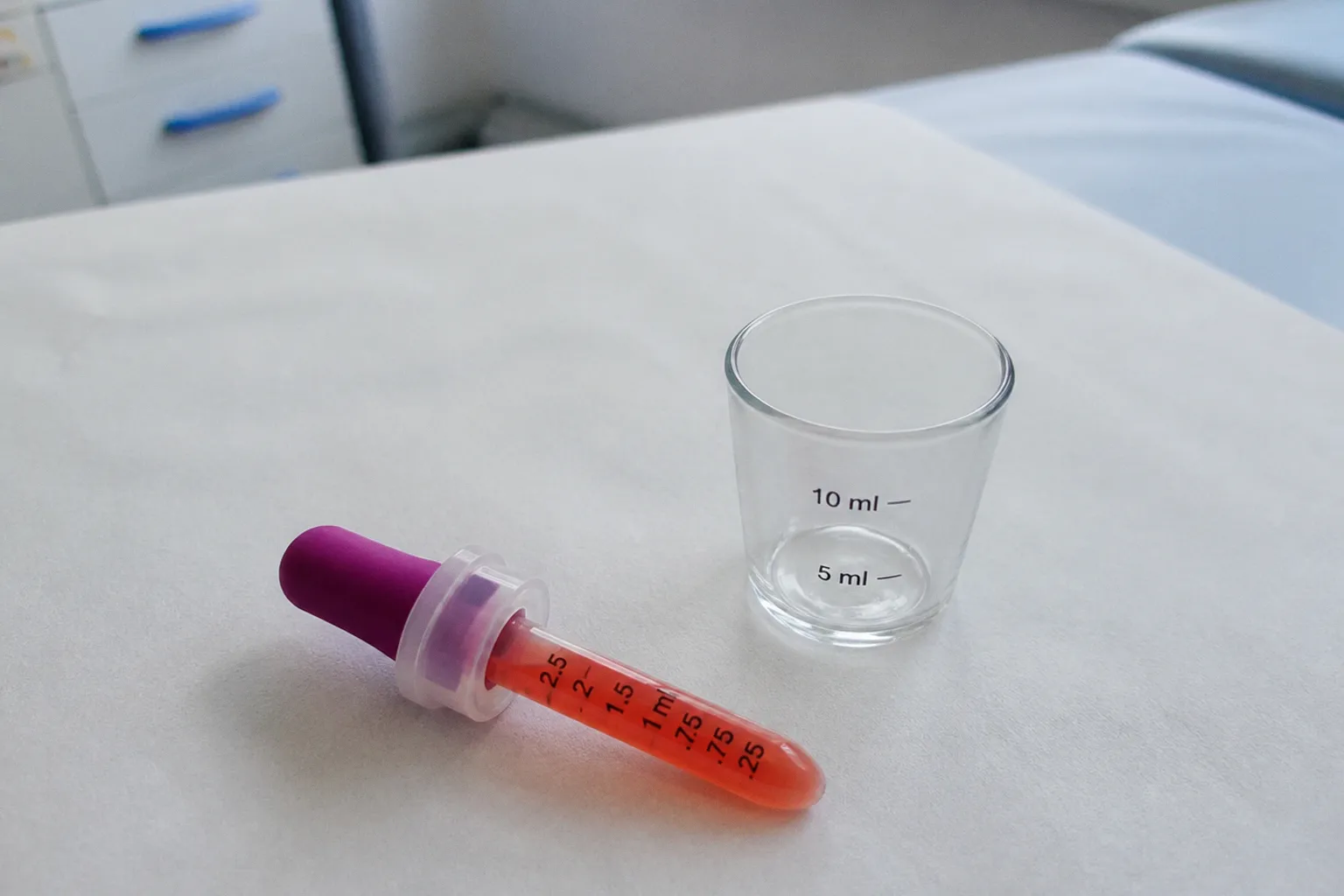
PFAPA Treatment Pathways: Which Option Fits Your Child?
This is high acute efficacy, but it does not prevent recurrence and may shorten the interval between subsequent attacks.
Tonsillectomy or adenotonsillectomy has a different therapeutic endpoint. Surgery does not provide rapid control of an active episode. It aims to reduce or eliminate the recurrent inflammatory cycle, with complete remission or substantial symptom reduction reported in approximately 50% to more than 83% of selected children. Prophylactic colchicine occupies an intermediate position: it can reduce flare frequency or severity in up to 81.8% of patients, but it requires ongoing medication and monitoring.
The relevant comparison is therefore not simply medication versus surgery. It is acute episode control versus prophylaxis versus an intervention intended to produce long-term remission.
PFAPA treatment options: tonsillectomy versus medication
PFAPA is a pediatric autoinflammatory syndrome characterized by periodic fever, aphthous stomatitis, pharyngitis, and cervical adenitis. Onset usually occurs between 6 months and 5 years of age. Flares commonly recur every 3–6 weeks and last approximately 3–7 days.
The syndrome is self-limiting in most children. Spontaneous resolution typically occurs after 5–7 years, without the long-term structural or developmental damage associated with destructive inflammatory disease. This natural history materially changes the treatment threshold. A therapy with a favorable short-term efficacy profile may still be unnecessary if episodes are infrequent, brief, and manageable. Conversely, repeated high-impact flares can justify escalation despite the benign long-term prognosis.
The main pathways differ in four operational parameters:
| Parameter | Corticosteroids | Colchicine prophylaxis | Tonsillectomy or adenotonsillectomy |
|---|---|---|---|
| Primary role | Aborts an active flare | Reduces flare frequency or severity | Seeks long-term remission |
| Typical timing | At the beginning of fever | Continuous or scheduled prophylaxis | Planned elective intervention |
| Acute episode control | Rapid; fever often resolves within 2–4 hours | Not an acute rescue strategy | Does not treat the current flare immediately |
| Effect on future flares | Does not reliably prevent recurrence; intervals may shorten | May reduce frequency or severity | Remission or major reduction in symptoms in many surgical candidates |
| Main burden | Repeated exposure to systemic corticosteroid | Ongoing medication and tolerability monitoring | Operative risk, recovery, and irreversible removal of tonsillar tissue |
| Best-fit clinical problem | Predictable, disruptive individual episodes | Frequent or burdensome recurrence when surgery is deferred | Refractory disease with substantial cumulative burden |
No option is universally superior. The appropriate pathway depends on flare frequency, episode severity, response to rescue therapy, medication burden, surgical suitability, and the value assigned to avoiding an elective operation.
Corticosteroids optimize episode control. Colchicine targets recurrence. Surgery targets the disease pattern itself.
Managing acute flares with corticosteroids
Corticosteroids are the most direct method for terminating a PFAPA episode. A single oral dose of prednisone or prednisolone at approximately 1 mg/kg, administered when the flare begins, resolves fever within 2–4 hours in more than 75% of patients. The reported complete fever-resolution rate is approximately 75.3%.
This response profile distinguishes PFAPA from routine viral fever. Acetaminophen and ibuprofen may reduce discomfort or temperature temporarily, but standard antipyretics generally do not halt or shorten the characteristic PFAPA cycle. They are symptomatic agents, not disease-modifying treatment for the inflammatory episode.
The corticosteroid pathway has three practical advantages:
1. High throughput at the point of care. A single dose can terminate the most visible component of the flare within hours rather than days.
2. Low procedural burden. It avoids an operation and does not require continuous daily prophylaxis.
3. Diagnostic clarity in a recurrent pattern. A reproducible rapid response can support the clinical characterization of PFAPA, although response alone is not a substitute for diagnostic assessment.
The principal limitation is recurrence. Corticosteroids suppress the active inflammatory episode but do not reliably change the underlying periodicity. In some children, the interval to the next flare becomes shorter after steroid-treated episodes. The treatment therefore has a favorable acute efficacy profile but limited preventive value.
Repeated episodic corticosteroid use should be assessed in relation to the actual disease burden. A child with a flare every several weeks may receive many courses over time. The relevant metric is not whether one dose works. It is whether repeated rescue treatment remains proportionate to the frequency, duration, and functional impact of the syndrome.
A typical evaluation includes:
- the number of flares over a defined observation period;
- the interval between episodes before and after corticosteroid treatment;
- fever duration without treatment;
- associated aphthous ulcers, pharyngitis, and cervical adenitis;
- missed school or childcare;
- disruption of sleep, feeding, and family routines;
- recurrence pattern after each steroid dose;
- whether the phenotype remains consistent with PFAPA rather than recurrent infection or another inflammatory disorder.
Corticosteroids are therefore best classified as episodic control, not prevention. They are particularly useful when episodes are stereotyped, the response is rapid, and the interval shortening is clinically acceptable.
Prophylactic medical strategies: colchicine and flare reduction
Colchicine is used as a prophylactic option when recurrent attacks create a sustained burden and a family or clinician prefers to defer surgery. Available evidence reports reduced flare frequency or severity in up to 81.8% of patients.
This figure should not be interpreted as an equivalent to complete remission. A reduction in attacks is a different endpoint from total elimination. The clinical value depends on the baseline flare pattern and the magnitude of the change. Reducing episodes from every few weeks to less frequent or less severe events may be sufficient for one child and inadequate for another.
Colchicine differs from corticosteroids in both pharmacologic purpose and evaluation logic:
- corticosteroids are administered at flare onset;
- colchicine is intended to modify the recurrence pattern;
- corticosteroids are judged by speed of fever resolution;
- colchicine is judged by the change in attack frequency, severity, and cumulative burden;
- corticosteroid exposure is intermittent;
- colchicine creates an ongoing medication pathway.
The response should be tracked using a consistent clinical record. A useful dataset includes flare dates, fever duration, associated manifestations, rescue medication use, school absence, and adverse effects. Without a baseline and follow-up interval, a subjective impression of improvement is difficult to distinguish from normal variation in PFAPA periodicity.
Colchicine is not a universal replacement for surgery. Its utility is highest when the reduction in flares is clinically meaningful and the treatment burden remains acceptable. It may be less attractive when episodes remain frequent despite prophylaxis, when adverse effects limit continuation, or when the primary objective is durable remission without long-term medication.
The comparison between colchicine and surgery is also not a direct efficacy contest. Colchicine is reversible and nonoperative. Tonsillectomy is definitive in intent but carries operative and recovery burdens. A medication trial may be reasonable when the natural history is being observed, when the child is young, or when the family does not accept elective surgery. Surgery may become more compelling when recurrent episodes continue to produce substantial functional disruption despite episodic and prophylactic treatment.
The surgical pathway: tonsillectomy and adenotonsillectomy
Tonsillectomy, with or without adenoidectomy, is the intervention most closely associated with long-term remission. Reported complete remission or significant symptom reduction ranges from approximately 50% to more than 83% in surgical candidates. In comparative data, children undergoing surgery were roughly four times more likely to be flare-free than nonsurgical controls.
The range is clinically important. It indicates substantial benefit for many children, but it does not support a guarantee of complete cure. Outcome estimates vary according to patient selection, diagnostic criteria, follow-up duration, procedure type, and the endpoint used. Complete remission, major reduction in symptoms, and improved quality of life are not interchangeable outcomes.
Surgery has a different risk-benefit architecture from medication:
Potential clinical advantages
- It can reduce the cumulative number of PFAPA flares.
- It may reduce or eliminate the need for repeated corticosteroid rescue.
- It removes the need for ongoing prophylactic medication in children who achieve remission.
- It may provide a more durable response than episodic treatment.
- It is particularly relevant when recurrent attacks create repeated absence from school or substantial family disruption.
Procedural limitations
- It requires anesthesia and postoperative recovery.
- It exposes the child to operative and postoperative risks.
- The benefit is not universal.
- The decision is irreversible.
- The long-term immunological impact of early tonsillectomy in pediatric autoinflammatory disease remains incompletely defined.
- It is not established that adding adenoidectomy provides superior PFAPA efficacy compared with tonsillectomy alone.
The last two points require strict separation from established efficacy data. The evidence supports surgery as an effective option for many refractory cases. It does not establish the optimal combination of tonsil and adenoid removal for every child, nor does it fully define long-term immunological consequences.
Surgical candidacy is therefore a clinical selection problem. The strongest rationale generally occurs when PFAPA is well characterized, episodes are recurrent and disruptive, acute therapy is insufficient as a long-term strategy, and the expected benefit exceeds the burden of an operation. The syndrome’s self-limiting course remains part of the calculation. A child with low-burden episodes may not justify the same intervention threshold as a child experiencing repeated multi-day attacks over several years.
Why standard antipyretics do not control PFAPA cycles
Acetaminophen and ibuprofen are commonly used during pediatric fever. In PFAPA, they generally do not terminate the inflammatory episode or materially shorten its duration. Their role is supportive: reducing discomfort, improving hydration tolerance, and managing fever-related symptoms.
This distinction prevents a common treatment misclassification. Failure of an antipyretic to stop the fever does not demonstrate treatment resistance to PFAPA therapy. Antipyretics are not designed to interrupt the syndrome’s periodic inflammatory mechanism. Corticosteroids, by contrast, are used specifically because they can suppress the flare rapidly.
The therapeutic sequence should not be interpreted as a simple escalation from one antipyretic to another. If the fever pattern is stereotyped and accompanied by aphthous stomatitis, pharyngitis, or cervical adenitis, repeated use of routine fever medication without a defined PFAPA strategy produces symptomatic management but no control of recurrence.
A structured medication record can separate three outcomes:
1. Temperature reduction: the fever becomes lower for a limited period.
2. Symptom relief: the child appears more comfortable or tolerates fluids better.
3. Episode abortion: the inflammatory flare resolves substantially earlier than its usual course.
Only the third represents effective acute control of the PFAPA episode. This is the endpoint associated with corticosteroid treatment, not routine antipyretic therapy.
Other diagnoses must remain in the differential when the phenotype is atypical, the episodes lack periodicity, the child has persistent symptoms between attacks, or the response pattern is inconsistent. PFAPA should not be treated as a default explanation for every recurrent fever syndrome.
Balancing intervention against the self-limiting course
PFAPA has an estimated incidence of approximately 1.4–4.2 per 10,000 children, although recognition and ascertainment influence reported rates. The typical onset is early childhood, and spontaneous resolution often occurs after several years. This creates a central decision constraint: a treatment can be effective and still not be necessary for every patient.
The clinical utility of each pathway can be assessed against five variables:
- Attack frequency. Episodes every 3–6 weeks create a different cumulative exposure than occasional attacks.
- Attack duration. Three-day episodes and seven-day episodes carry different functional costs.
- Response to rescue treatment. Rapid corticosteroid response favors episodic control, but interval shortening may shift the balance toward prophylaxis or surgery.
- Cumulative burden. School absence, impaired sleep, feeding disruption, and repeated clinical visits are relevant endpoints.
- Expected time to spontaneous resolution. Observation has greater value when disease burden is low and the child is approaching the usual resolution window.
A practical comparative assessment can be framed as follows:
Episodic corticosteroid treatment is most coherent when
- flares are clearly recognizable;
- rapid resolution is clinically valuable;
- recurrence remains acceptable;
- the child does not require continuous prophylaxis;
- repeated courses are reviewed rather than issued without monitoring.
Colchicine is most coherent when
- attacks are frequent or cumulatively disruptive;
- the objective is to reduce recurrence rather than only terminate fever;
- surgery is being deferred;
- the treatment response can be measured over time;
- medication burden and tolerability are acceptable.
Tonsillectomy is most coherent when
- the PFAPA diagnosis is clinically consistent;
- episodes remain substantially burdensome;
- repeated corticosteroid treatment is not an adequate long-term strategy;
- prophylactic medication is ineffective, poorly tolerated, or undesirable;
- the family accepts operative risk in exchange for a possibility of durable remission.
The analysis should not be reduced to a single percentage. The 75.3% rapid fever-resolution rate for prednisone describes acute efficacy. The 81.8% colchicine figure describes reported symptom reduction or flare reduction. The 50% to more than 83% surgical range describes long-term remission or significant improvement in selected surgical populations. These endpoints operate on different timescales and cannot be ranked without defining the treatment objective.
The correct comparator is not the largest percentage. It is the endpoint that matches the child’s clinical burden.
Clinical utility assessment
PFAPA treatment pathways can be ranked by function, not by a universal hierarchy.
Corticosteroids have the strongest utility for immediate flare abortion. Their limitation is recurrence, including the possibility of shorter intervals between attacks. Colchicine has preventive intent and may reduce the frequency or severity of episodes in a substantial proportion of children, but it requires an ongoing medication strategy and objective follow-up. Tonsillectomy offers the highest potential for durable remission among the available pathways, while retaining a meaningful nonresponse rate and exposing the child to surgical risk.
The self-limiting nature of PFAPA supports observation when the burden is low. It does not invalidate intervention when attacks are frequent, prolonged, or functionally disruptive. The decision should be based on phenotype stability, cumulative burden, treatment response, and the risk tolerance associated with each pathway.
For most children, a rational sequence is:
1. Establish that the recurrent fever pattern is compatible with PFAPA and not better explained by infection, immunodeficiency, or another inflammatory disorder.
2. Use corticosteroids as episode-directed therapy when rapid control is required.
3. Document whether repeated treatment is associated with shorter inter-episode intervals or increasing cumulative burden.
4. Consider colchicine when recurrence remains clinically significant and a nonoperative preventive strategy is preferred.
5. Evaluate tonsillectomy or adenotonsillectomy when disease remains refractory or the burden justifies an elective procedure.
6. Reassess the balance against expected spontaneous resolution, particularly in children with mild or declining disease activity.
The rigid clinical conclusion is straightforward: corticosteroids are an acute-control assay, colchicine is a recurrence-reduction strategy, and tonsillectomy is a remission-oriented intervention. None guarantees complete resolution. The appropriate choice is the one whose efficacy endpoint, treatment burden, and risk profile correspond to the actual PFAPA pattern rather than to a generic preference for medication or surgery.