New Multi-Omics Approach Aims to Diagnose Pediatric Asthma Without Spirometry
For decades we have faced a frustrating clinical presentation in pediatric pulmonology: a toddler with recurrent wheeze and night-time respiratory distress whose immune cascade is clearly misfiring…
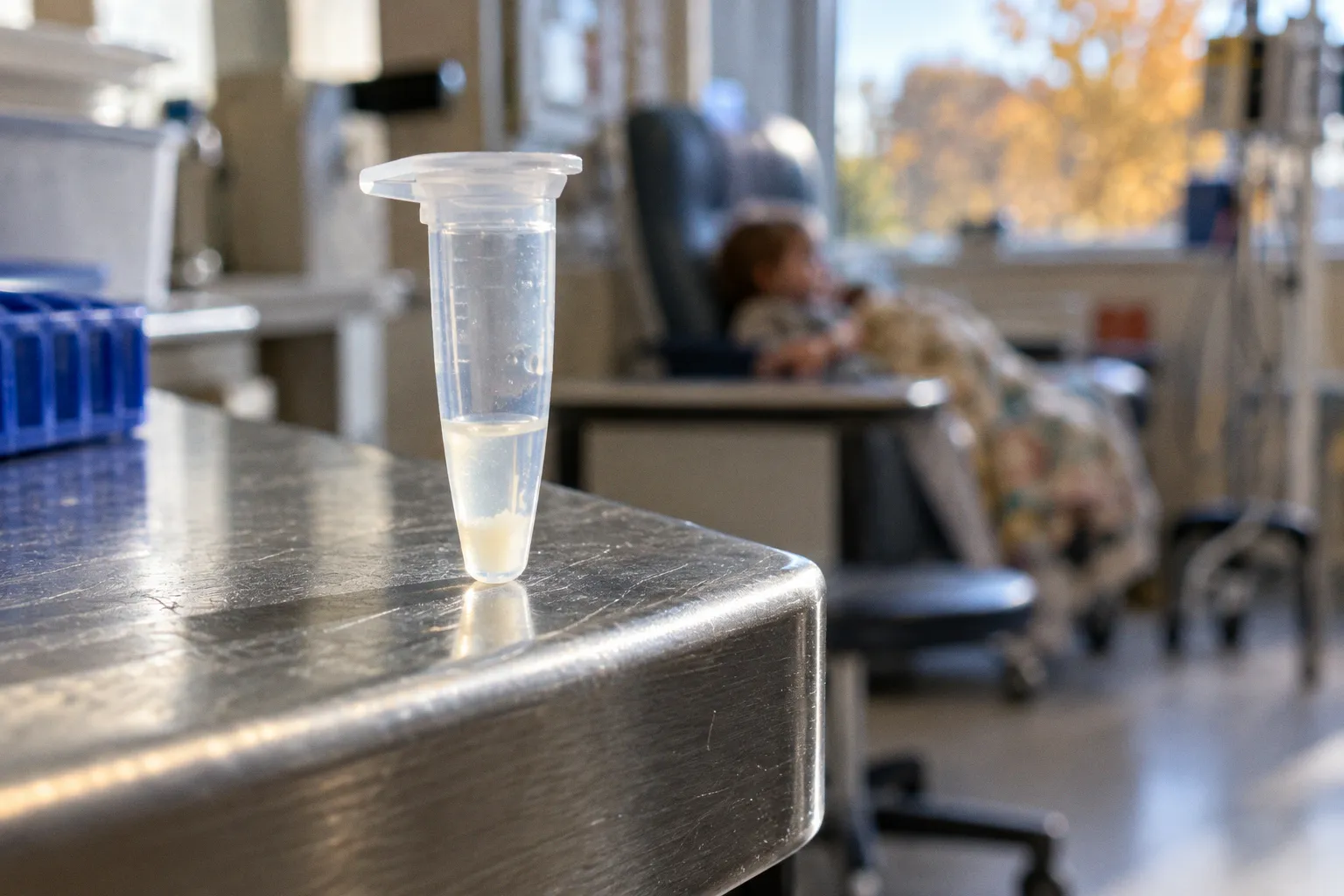
For decades we have faced a frustrating clinical presentation in pediatric pulmonology: a toddler with recurrent wheeze and night-time respiratory distress whose immune cascade is clearly misfiring, yet who cannot perform the spirometry needed for an objective asthma diagnosis. According to respiratory-therapy.com, researchers at University Children's Hospital Zurich (Kispi) and Empa have launched a 4-year collaborative project designed to close that pre-school gap by combining breath analysis with genetic testing in infants and young children. If the multi-omics protocol holds up, it could give us a non-invasive tool to guide early-life management decisions long before a child can blow into a spirometer.
Why the Pre-School Diagnostic Gap Matters
Standard lung function testing requires a level of coordination most children cannot achieve until around age 5, which leaves an entire developmental window where families and clinicians must manage suspected airway disease essentially on clinical suspicion. The stakes are real on both sides of the diagnostic line. Alexander Möller, senior consultant in pneumology at Kispi, has warned that untreated asthma carries a high risk of frequent and severe attacks and that the chronic inflammation can lead to scarring that permanently restricts lung function. At the same time, he noted, children who do not actually have asthma but are still given maintenance medication can experience meaningful side effects, including stunted growth. That is precisely the management pathway uncertainty that makes a reliable early-life diagnostic tool so clinically important for the children and families we follow.
How the Multi-Omics Protocol Works
The project rests on a multi-omics framework. Two earlier research threads anchor it: exhaled air contains molecular indicators of airway inflammation, and pediatric asthma carries a pronounced genetic component. The proposed clinical workflow pairs a buccal swab for DNA testing with exhaled breath analysis through high-resolution time-of-flight mass spectrometry. Children enrolled in the prospective observational cohort breathe into a specialized collection bag, and their samples are processed through a machine learning model designed to identify disease-specific molecules and generate predictive models about which toddlers will go on to develop asthma. As Möller has described it, once the participants reach age 5, the team verifies these predictions against the established diagnostic protocol, creating a training loop that ties novel biomarkers to a gold-standard outcome.
In the initial two of the project's five phases, Kispi is recruiting 180 children aged 2 to 4 years — 120 with recurrent respiratory symptoms and 60 healthy controls. That cohort will feed both the breath-spectroscopy pipeline and later work on characterizing asthma-associated genetic variants. Marija Buljan, project leader within Empa's Multi-Omics for Healthcare Materials team, has emphasized the practical goal of moving from whole-genome sequencing to a targeted gene panel so that clinicians can specifically search for known asthma-associated variants rather than sequencing everything. The Empa team is also constructing a computational model of cellular signaling pathways, focusing on the specific immune cells that drive airway symptoms in most pediatric asthma cases, and validating those pathway maps through cell-based laboratory experiments designed to isolate the key disease-related genes.
What to Watch as the Project Moves Forward
For our immunology colleagues and the families who follow this research, the next milestones to track are concrete. Recruitment and baseline characterization of the 180-child cohort will determine how robust the breath-based biomarkers prove to be. The verification step at age 5 will be the first real stress test of the predictive model. And the transition from whole-genome sequencing to a defined gene panel — paired with validated immune-cell pathway maps — is what will eventually determine whether this protocol can move from a research setting into everyday pediatric care, and whether we finally have an objective way to intervene in the immune cascade driving early asthma before it shapes a child's long-term quality of life.