First immunology appointment: checklist for parents
When a parent walks into a pediatric immunology clinic for the first time, I can usually tell within the first five minutes whether we are going to have a productive diagnostic conversation or…
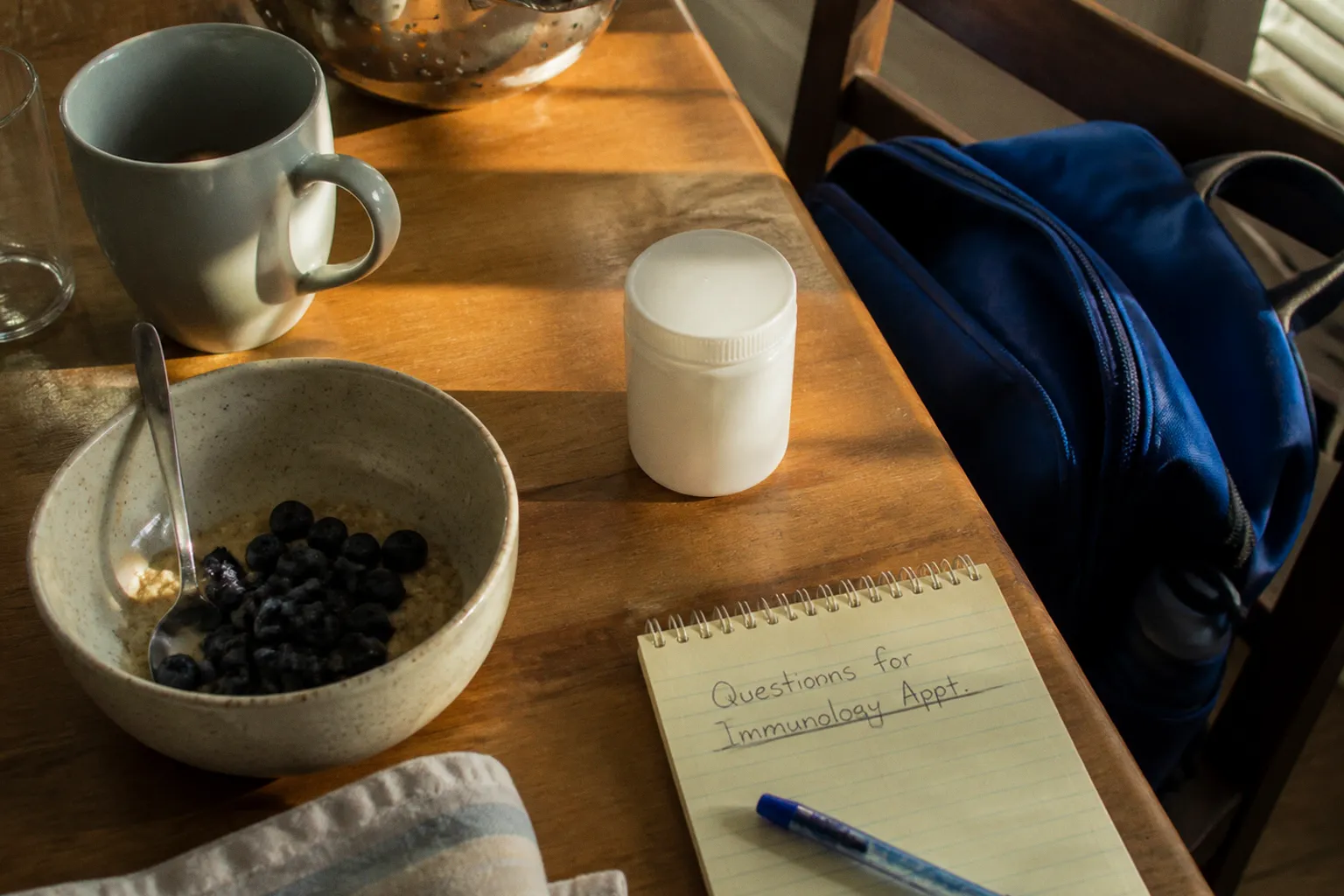
When a parent walks into a pediatric immunology clinic for the first time, I can usually tell within the first five minutes whether we are going to have a productive diagnostic conversation or whether we will spend most of the visit reconstructing basic clinical facts that should have arrived in the intake packet. The pediatric immunologist appointment checklist is not a collection of nice-to-haves. It is the difference between a meaningful first consult and a wasted one.
An initial immunology consult is, at its core, a data-gathering exercise. The clinician's ability to narrow a differential and build a diagnostic trajectory depends almost entirely on what you bring through the door.
Here is what actually determines whether that first visit moves the workup forward or resets it.
Essential documentation and medical history gathering
The most common failure I see in initial pediatric immunology visits is incomplete outside records. Parents arrive with a verbal history and a vague recollection that "some bloodwork was abnormal last year," but without the actual lab reports. That is not useful. A clinical immunologist needs the actual numerical values, reference ranges, dates, and ordering clinicians for every prior test.
What belongs in the packet, in order of priority:
- Outside laboratory results. Any abnormal CBC with differential, immunoglobulin panels (IgG, IgA, IgM, IgE), lymphocyte subsets, vaccine titer results, and prior allergy testing. Bring the original printouts or the physician's office summary, not just your interpretation of what was "high" or "low."
- Complete immunization records. Not just the standard schedule vaccines. Include any delayed doses, missed doses, travel-related vaccines, and reaction history. For a suspected primary immunodeficiency, vaccine response is itself a diagnostic endpoint, and the clinician needs the full picture.
- Current medication list with exact dosages and frequencies. Include over-the-counter medications, supplements, probiotics, and topical preparations. If your child takes an antihistamine, a leukotriene modifier, a daily controller inhaler, or any biologic therapy, the dose matters.
- Growth charts and developmental milestones. Failure to thrive and developmental delays are relevant clinical signals in the pediatric immunodeficiency workup.
- Primary care pediatrician contact information. The immunology team will want to request records directly and coordinate follow-up.
- Family history of immune disorders, recurrent infections, childhood deaths, autoimmune disease, or consanguinity. For genetic immunodeficiencies, this is not optional.
| Record category | What the clinician actually needs | The gap I see most often |
|---|---|---|
| Outside lab results | Numerical values, reference ranges, dates, ordering clinician | Parent paraphrases "something was off" |
| Immunization records | Full schedule including timing of each dose | Incomplete records from multiple providers |
| Medication list | Generic and brand names, exact doses, frequency | OTC and "as needed" medications omitted |
| Growth charts | Longitudinal weight and height trajectory | Only the most recent measurements |
| Family history | Three-generation pedigree where possible | Single-sentence verbal summary |
If your child has had any prior specialty evaluations — pulmonology, ENT, hematology, gastroenterology, dermatology — bring those notes too. Recurrent otitis media, chronic rhinosinusitis, refractory eczema, and unusual gastrointestinal presentations are all part of the immunology differential, and cross-specialty documentation saves time on the day.
Navigating medication holds and pre-appointment protocols
This is where things go wrong most often, and I have to be direct: do not stop prescribed medications based on what you read in a generic checklist or a parent forum. The holds that matter are specific, time-limited, and clinician-supervised.
Antihistamines. If skin prick testing is anticipated — and for an initial allergy or immunology evaluation, it often is — most pediatric clinics follow a 4- to 7-day antihistamine hold window. Children's Mercy, for example, advises stopping all oral antihistamines 7 days before the appointment. That includes cetirizine, loratadine, fexofenadine, diphenhydramine, hydroxyzine, and any combination cold products that contain an antihistamine. The mechanism is straightforward: antihistamines block the H1 receptor pathway that the skin prick test depends on. A false negative because the drug was not held means the test has to be repeated — another clinic visit, another needle exposure, another week of waiting.
What you should NOT stop without explicit instruction from the prescribing immunologist or allergist:
- Asthma controller inhalers (inhaled corticosteroids, long-acting beta-agonists, combination products)
- Oral controller medications for asthma or allergic disease
- Biologic therapies (omalizumab, dupilumab, mepolizumab, and similar agents)
- Immunosuppressive medications
- Immunoglobulin replacement therapy, if already established
| Medication class | Hold before skin testing? | Typical hold | Important caveat |
|---|---|---|---|
| Oral antihistamines (cetirizine, loratadine, etc.) | Yes | Up to 7 days | Includes OTC combination cold products |
| Second-generation antihistamines | Yes | Often 5–7 days, varies | Confirm with the specific clinic |
| Hydroxyzine, doxepin (sedating antihistamines) | Yes | 7 days or longer | Longer washout period |
| Asthma controller inhalers | No | Continue as prescribed | Do not stop without clinician instruction |
| Leukotriene modifiers (montelukast) | Clinic-dependent | Confirm with clinic | Institutional protocols vary |
| Biologic therapies (omalizumab, dupilumab, etc.) | Generally no | Continue unless told otherwise | Stopping requires specialist approval |
| Topical steroids or antihistamines on the test site | Yes | Per clinic instruction | Affects local skin reactivity |
Stopping an antihistamine for a week is trivial. Stopping a controller medication or a biologic because you read it somewhere is not. Every medication hold gets confirmed directly with the prescribing clinician — no exceptions.
The 7-day window is not universal. Some clinics use a shorter hold for certain second-generation agents; others use a longer hold for sedating antihistamines like hydroxyzine. Call the scheduling line, confirm the protocol that applies to your child, and write down who you spoke with and when.
Managing expectations for clinical testing and timelines
First visits run long. UPMC Children's Hospital of Pittsburgh has published guidance that initial allergy specialist visits can last up to two hours. For a pediatric immunodeficiency workup, expect a similar envelope — sometimes longer when the history is complex or when additional testing is initiated on the same day.
Here is the realistic testing landscape and what the actual turnaround times look like:
- Skin prick testing. Approximately 15 to 20 minutes for the wheal-and-flare reaction to develop in the office. The child stays in the clinic, the results are read at the bedside, and the clinician can begin pattern-matching immediately. This is the fastest diagnostic modality available.
- Specific IgE blood testing (ImmunoCAP or equivalent). Results typically take about one week to process at most reference laboratories. This is the alternative when skin testing is not feasible: antihistamines cannot be held, severe eczema covers the test sites, or there is a documented history of anaphylaxis to the suspected allergen.
- Quantitative immunoglobulins and lymphocyte subsets. Turnaround varies, but expect several days to a week at most commercial labs.
- Genetic panels for primary immunodeficiencies — SCID, Wiskott-Aldrich syndrome, DiGeorge syndrome, chronic granulomatous disease, congenital neutropenia, and the broader category of inborn errors of immunity. Turnaround times vary significantly by laboratory and by panel size. Targeted single-gene testing is faster than broad PID panels, and whole-exome sequencing can take weeks to months. Ask the ordering clinician directly which laboratory they use and what their typical turnaround has been recently.
A practical point that often surprises parents: if the visit is for an initial immunology workup rather than straightforward allergy testing, the clinician may not perform skin prick testing at all. Pediatric primary immunodeficiencies are diagnosed primarily through bloodwork — CBC with differential, lymphocyte subsets, quantitative immunoglobulins, specific antibody responses to vaccines, and genetic confirmation. Skin testing is one tool among many, not the default. Parents expecting a quick skin-test-and-go experience are often surprised at how lab-driven the PID diagnostic pathway actually is.
Logistical preparation for extended pediatric consultations
A two-hour visit with a young child is a real logistical undertaking. Parents who plan for it tend to have a calmer child and a more useful conversation with the clinician. Parents who do not plan for it spend half the visit managing a meltdown and lose the substantive discussion.
Practical preparation:
- Distraction tools. Skin prick tests require the child to remain reasonably still for 15 to 20 minutes while the wheals develop. Toys, books, tablets with preloaded content, and small comfort items — a favorite blanket, a stuffed animal — are recommended by pediatric allergy programs for exactly this reason. The child does not need to be silent; they need to not be scratching the test sites.
- Snacks and water. Two hours is long, particularly for infants and toddlers. Bring something appropriate for the child's age, and confirm ahead of time whether the clinic asks you to avoid specific foods before testing.
- A second adult if possible. For younger children, one adult managing the child during testing while the other listens to clinical instructions is materially useful. The clinician will be explaining dosing changes, follow-up labs, and possibly the rationale for genetic testing — none of which lands well if the parent who needs to hear them is physically holding down a toddler.
- Dress the child in short sleeves or clothing that allows easy access to the forearms and back, which are common skin prick test sites. Tight clothing that has to be removed or pulled aside wastes time.
- Block out the full visit window in your schedule, not just the start time. The most useful part of the consultation is usually the last 20 minutes, when the clinician has finished the exam and is sitting down to summarize the plan.
Legal and consent requirements for non-parental guardians
This one catches families off guard, and I want to be specific because the rule is not a suggestion.
Children's Hospital of Philadelphia has published guidance that is unambiguous: a parent or legal guardian must accompany the child to the visit to provide the medical history and sign the consent for examination. If another adult — a grandparent, an aunt, a family friend, a nanny — is bringing the child in the parent's place, that adult must bring a written authorization letter, witnessed and signed by two adults. This is a legal document, not a courtesy, and the signature requirement is two witness signatures in addition to the parent's.
The practical implications matter. If you are a working parent who cannot attend the appointment, do not assume a grandparent can simply show up with the child and handle the visit. The authorization letter must be in hand, properly witnessed, and signed by the required number of adults. Some clinics have their own authorization forms — call ahead and ask.
This is particularly relevant for genetic testing consent. If the immunology workup includes any genetic panel — and for a suspected primary immunodeficiency it often does — the consent conversation is specific, detailed, and legally required. The consenting adult needs to understand what is being tested, what incidental findings might emerge, how the data will be stored, and what the implications are for the child and potentially for other family members. That conversation does not happen with a well-meaning relative who is unfamiliar with the clinical context.
Final word
The first pediatric immunology visit is a high-leverage moment. The decisions made in that room shape the diagnostic workup, the follow-up cadence, and in some cases — particularly for SCID and other severe combined immunodeficiencies — the window for definitive intervention. Walking in with organized documentation, a clear medication list, a confirmed hold protocol, and realistic expectations about timelines is the single highest-return preparation a parent can make.
A short pre-visit protocol, distilled:
1. Pull every outside lab report, immunization record, growth chart, and current medication list — with dosages — into a single folder before you leave the house.
2. Call the clinic and confirm their specific antihistamine hold requirement if skin prick testing is on the table.
3. Do not stop any prescribed controller medication, biologic, or immunoglobulin replacement without a direct conversation with the prescribing clinician.
4. Block out the full visit window — up to two hours — and bring distraction tools, snacks, and ideally a second adult.
5. Ensure a parent or legal guardian attends, or bring a properly witnessed written authorization for the accompanying adult.
6. Ask the ordering clinician, before you leave, which laboratory they will use for any genetic panel and what the realistic turnaround is.
That preparation will not change the diagnostic outcome. It will compress the time to one, and it will keep the first visit from being the one where everybody is still catching up.